The philosophy of minimalist design characteristics fundamentally centers on achieving clarity and beauty through extreme simplicity. This approach strips away all non-essential elements, decoration, and superfluous detail to focus solely on the necessary components, thus maximizing impact and functionality. The primary minimalist design characteristics are Generous Negative Space (Whitespace), Monochromatic or Limited Color Palettes, Emphasis on Functionality, Clean Lines and Simple Forms, and a strong Focus on Typography and Visual Hierarchy. These elements work together to reduce cognitive load and enhance the user or viewer’s experience, often leading to increased engagement and improved focus.

The very essence of Minimalist Design Characteristics is captured by the famous dictum, “Less is More,” a phrase immortalized by the architect Ludwig Mies van der Rohe. This is not simply an aesthetic choice; it is a conscious decision to prioritize clarity, purpose, and quality over quantity and ornamentation. The enduring relevance of minimalist design characteristics stems from their ability to create experiences, environments, and products that are simultaneously calming, highly functional, and intellectually honest.
The Core Philosophy: “Less is More”
Understanding the true depth of minimalist design characteristics requires a look at the core philosophical commitment to “Less is More.” This concept extends far beyond mere visual decluttering; it is an organizational principle that insists every element present must serve a purpose, whether that purpose is functional, structural, or essential to the narrative. If an element can be removed without compromising the integrity of the design, it should be removed. This radical commitment to essentialism is what defines the most successful applications of minimalist design characteristics.
This philosophy has deep roots, drawing from traditional Japanese aesthetics, particularly Zen Buddhism, which values simplicity, asymmetry, and natural forms. These historical influences emphasize the beauty found in natural, unadorned materials and the profound impact of empty space—concepts that are central to contemporary minimalist design characteristics. For instance, traditional wabi-sabi embraces imperfection and transient beauty, principles that translate into using raw, honest materials and simple forms in modern design. The result is an environment that feels both grounded and intentionally composed.
When this philosophy is applied to practical fields like web and product development, the effect is transformative. A website that adheres to core minimalist design characteristics does not overwhelm the visitor with navigation options, animations, or competing visual elements. Instead, it guides the user directly to the desired content or action, optimizing the path to conversion or information delivery. Research shows that this reduction in cognitive load—the mental effort required to process information—can be incredibly beneficial, with some studies indicating that such designs can increase engagement rates by up to 35% in e-commerce settings because users can focus exclusively on the product details.
The dedication to this “Less is More” principle also imposes a necessary discipline on the designer. When there are fewer elements to work with, each remaining component must be of the highest quality and must be placed with meticulous precision. This means investing in superior materials in architecture, choosing the perfect font pairing in graphic design, or ensuring flawless rendering in digital interfaces. The success of minimalist design characteristics relies entirely on this relentless pursuit of quality and intention. The absence of clutter forces the user’s attention onto the few, well-chosen focal points.
Therefore, the defining trait of “Less is More” is not the absence of things, but the presence of only the important things. It is an active process of refinement and prioritization. It challenges the common impulse to fill space and instead celebrates the power of visual silence. This philosophical rigor is the foundation upon which all technical minimalist design characteristics are built, ensuring the final output is meaningful, efficient, and beautifully restrained.
Essential Minimalist Design Characteristics: The Pillars of Simplicity
To properly execute the minimalist vision, designers rely on a set of core technical elements. These are the practical minimalist design characteristics that translate the abstract philosophy into tangible form across various disciplines, including architecture, graphic design, and user experience (UX) design. Each pillar supports the others to create a harmonious and purposeful whole.
Generous Use of Negative Space (Whitespace)
Perhaps the most immediately recognizable and crucial of all minimalist design characteristics is the deliberate and generous use of negative space, often referred to as whitespace. Negative space is not “empty” space; it is a powerful design tool that gives elements room to breathe and allows the eye to rest. It is the visual air that separates, defines, and highlights content.
The functional application of whitespace is key to the success of minimalist design characteristics. By surrounding critical elements—such as a product image, a title, or a call-to-action button—with substantial negative space, the designer immediately elevates that element’s visual importance. This ensures a strong, unmistakable visual hierarchy that guides the user’s attention exactly where it needs to be. For example, prominent technology companies like Apple and Dropbox are masters of this technique on their websites, utilizing vast expanses of white or neutral space to draw the focus to a single, high-quality image or a succinct block of text.
The psychological impact of generous negative space cannot be overstated. When a viewer encounters a design saturated with whitespace, they experience a sense of calm and order. Studies in cognitive psychology repeatedly suggest that a cluttered visual environment leads directly to a cluttered mind, increasing anxiety and making decision-making more difficult. Conversely, designs rooted in minimalist design characteristics reduce this cognitive friction, making the consumption of information feel effortless and pleasant. The simplicity and clarity translate directly into better comprehension and retention.
Furthermore, the skillful use of negative space can define relationships between elements. The proximity or distance between two blocks of text or images, managed by whitespace, clearly indicates whether they are related or distinct ideas. This principle is vital in organizing complex data or lengthy content, ensuring that the design itself is inherently intuitive. Effective minimalist design characteristics leverage this spatial awareness to structure the entire experience without the need for obtrusive dividers or heavy boxes.
Analogically, consider an art museum: the most valuable pieces are often displayed alone on a large, blank wall. The empty space around the sculpture or painting is integral to its presentation, forcing the observer to focus entirely on the object itself. In this sense, negative space in minimalist design characteristics acts as a frame, isolating and celebrating the content within. It is a calculated emptiness that delivers maximum visual weight to the essential information.
Monochromatic or Limited Color Palettes
Another defining element of minimalist design characteristics is the discipline applied to color. Minimalist designs typically adhere to a strict monochromatic, duotone, or extremely limited color palette. The goal is to avoid the distraction and visual noise that multiple competing colors can generate. Instead, color is used sparingly as an accent to denote importance, indicate status, or emphasize branding.
Historically, the palette for minimalist design characteristics has been dominated by neutrals: black, white, and various shades of gray. This trio provides a high degree of contrast, maximizing readability and creating a timeless, sophisticated aesthetic. White is frequently used as the primary background color, serving as the literal “canvas” of the negative space. Black and dark grays are then employed for text, while a single, carefully chosen accent color—perhaps a vibrant blue, a muted green, or a sharp red—is reserved exclusively for interactive elements like buttons, links, or error messages.
However, modern trends show an evolution in the color-related minimalist design characteristics. In recent years, especially with the rise of technology and longer screen times, dark mode options have become an established adaptation of minimalism. This reversal of the traditional palette—using dark backgrounds with light text—maintains the high-contrast, limited-palette philosophy while offering a new aesthetic that is easier on the eyes in low-light environments. This evolution proves that the characteristics are adaptable, prioritizing user comfort and function over rigid adherence to a single color scheme.
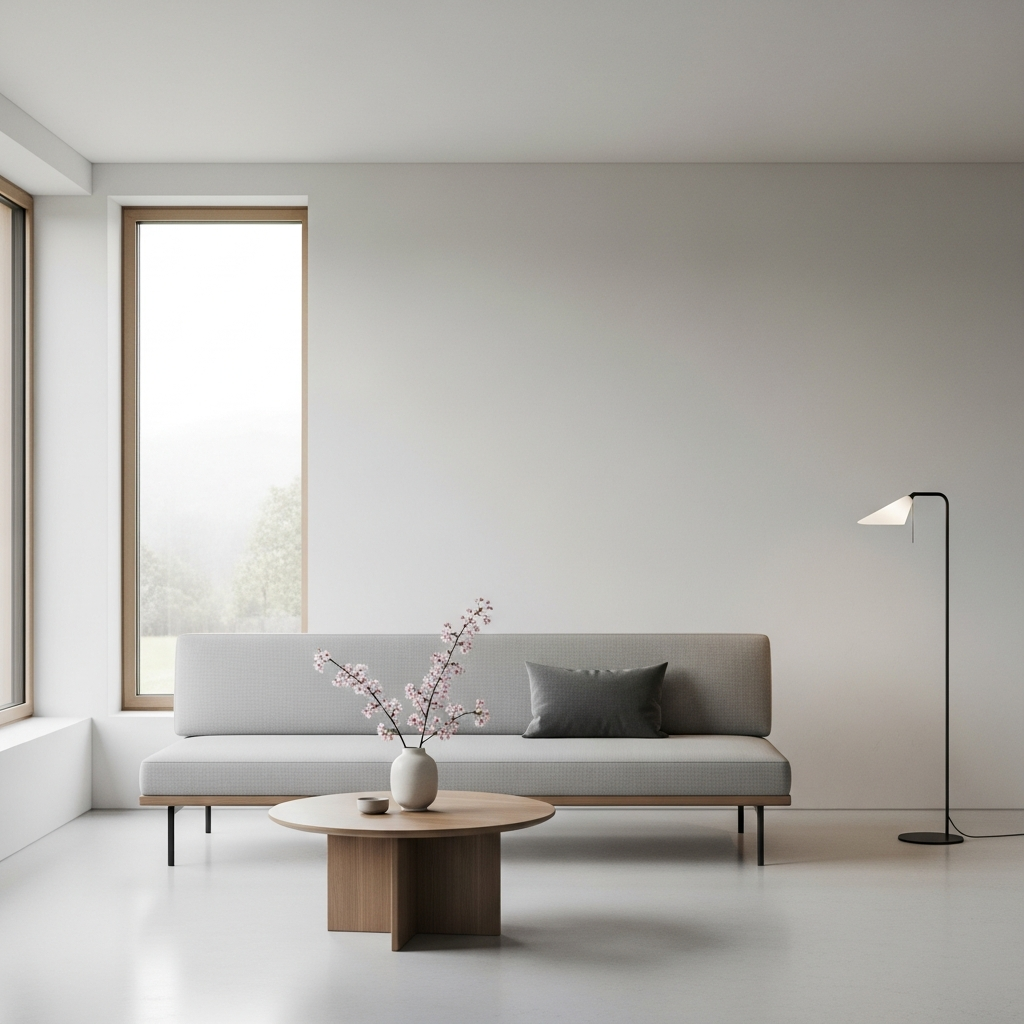
Moreover, in interior design and architecture, the color profile is shifting. The emergence of the “Japandi” style—a seamless hybrid of Japanese and Scandinavian minimalism—is introducing warmer, more textural neutrals. The palette still respects the limits inherent in minimalist design characteristics, but it expands to include warm tones like terracotta, taupe, and creamy off-whites. This shift adds a sense of organic warmth and coziness without sacrificing clarity, proving that even a restrained aesthetic can feel inviting and layered. The underlying principle remains the same: color must be intentional, not decorative.
When considering the application of color in minimalist packaging, the concept is striking. Imagine a high-end perfume bottle: the glass is clear, the label is small and uses only black text, and the color is derived solely from the liquid inside or a subtle accent on the cap. This adherence to limited color—one of the foundational minimalist design characteristics—communicates quality, elegance, and confidence, suggesting that the product itself is compelling enough without the need for flashy external packaging.
Emphasis on Functionality and Utility
Above all aesthetic concerns, minimalist design characteristics are predicated on functionality. The design must be useful. If an object, structure, or interface is beautiful but cumbersome or non-intuitive, it has failed the minimalist test. This principle means that every decision, from the choice of material to the placement of a navigation bar, is driven by an assessment of its practical utility. Form follows function with unwavering strictness.
In the context of physical product design, this emphasis leads to objects that are highly durable, easy to use, and require minimal maintenance. Think of the classic Scandinavian chair: its structure is reduced to the necessary components—four legs, a simple seat, and a clean backrest—yet it is ergonomically sound and built to last. The simplicity of its form, a direct result of minimalist design characteristics, is merely a byproduct of its functional purity. There is no superfluous carving or upholstery; the material (often natural wood) is allowed to speak for itself.
In digital design, functionality translates into intuitive visual hierarchy and straightforward navigation. A user should never have to guess where to go or how to perform an action. Minimalist interfaces achieve this by limiting the number of options available at any given time, thereby focusing the user’s attention on the primary task. The most compelling minimalist design characteristics in UX design ensure that the path to completing an action—such as checking out an item, reading an article, or uploading a file—is the shortest and clearest possible route. The design’s utility is the measure of its success.
Furthermore, the focus on functionality is deeply connected to sustainability and efficiency. By eliminating unnecessary components, designers reduce the complexity of manufacturing, often lowering production costs and material waste. This efficiency is a functional benefit that extends beyond the product itself to its environmental and economic impact. For example, architects who adhere to minimalist design characteristics often opt for modular, prefab structures with integrated, multi-use features, maximizing the utility of every square meter while minimizing the construction footprint.
In sum, the priority of functionality demands honesty from the designer. It requires a rejection of ornamentation for ornamentation’s sake. The beauty in truly effective minimalist design characteristics is the clarity that arises when an object or interface performs its intended task with supreme efficiency and grace.
Clean Lines and Uncluttered Forms
The visual language of minimalist design characteristics relies heavily on geometric precision, characterized by clean lines, sharp angles, and uncluttered forms. Designers avoid curves, scrolls, highly textured surfaces, and complex shapes unless they serve a vital, functional purpose. The result is an aesthetic of stability, order, and modernity.
This characteristic manifests differently across disciplines. In architecture, it means prioritizing the structural elements: flat roofs, large, unadorned glass panels, and exposed concrete or steel frames. The geometry of the building itself—squares, rectangles, and straight lines—becomes the decoration. Houses built with these minimalist design characteristics often appear as pure, intersecting volumes that engage in a powerful dialogue with the surrounding light and environment. The interior spaces echo this, featuring built-in cabinetry and hidden storage solutions that maintain the unbroken, clean lines of the walls.
In graphic and web design, clean lines translate into simple, grid-based layouts and the strategic use of abstract geometry. Icons are simplified to their most essential, recognizable forms; borders are defined by the meeting of colors and spaces rather than heavy outlines. A design that faithfully adheres to minimalist design characteristics utilizes a strong, underlying grid structure to ensure every element—text, image, button—is perfectly aligned, creating a sense of visual equilibrium that the human brain finds inherently satisfying and easy to process.
The “uncluttered form” aspect is particularly important in interior design. A hallmark of minimalist design characteristics is the absence of visible clutter. This is achieved not just by having fewer items, but by smart, integrated storage solutions. Furniture is often multi-functional and built low to the ground to enhance the perception of open space. Everything has a place, and nothing is left to drift aimlessly. This meticulous organization is crucial; a minimalist space with poor organization quickly becomes a sparse, disorganized space, losing the intended feeling of calm and purpose.
This visual purity is what gives minimalist works their timeless quality. Unlike highly decorative or trendy styles, the focus on fundamental geometric shapes and unadorned surfaces ensures that the design does not quickly become dated. The enduring appeal of pure minimalist design characteristics lies in their structural honesty and resistance to fleeting aesthetic trends.
Focus on Typography and Visual Hierarchy
Because decoration is removed, the remaining elements must shoulder a heavier load of communication. This elevates typography to a starring role within minimalist design characteristics. In the absence of complex imagery, font choice, size, weight, and spacing become the primary tools for conveying tone, directing attention, and establishing the visual hierarchy.
A designer practicing minimalist design characteristics typically selects clean, highly readable, and usually sans-serif typefaces. Fonts are chosen for their neutrality and clarity, avoiding overly ornamental or handwritten styles. The text itself is treated as a foundational element of the design, not just a carrier of information. Contrast is used strategically: large, bold headings are paired with lighter, smaller body text to establish a clear reading order and guide the user through the content.
Visual hierarchy, established largely through typography and the strategic use of negative space, is the roadmap of a minimalist work. It dictates the order in which information should be consumed. The goal is to ensure the most important message is seen first, followed by supporting details, and finally, secondary information. This intentional sequence is one of the most powerful and understated minimalist design characteristics in UX design, making complex information accessible.
Consider a mobile application designed with minimalist design characteristics. The main action button will be larger and perhaps use the single accent color; the main heading will be bold and centered; the supporting text will be smaller and gray. This layered presentation ensures instant comprehension and allows the user to absorb information quickly without confusion. This psychological benefit—reducing cognitive load—is a key finding that reinforces the utility of this approach. By using text size and weight variations rather than boxes, underlines, or colors, the design maintains its clean, uncluttered aesthetic.

In book design, the same principles apply. A cover adhering to minimalist design characteristics might feature only the author’s name and title in a beautiful, precise font, centered on a field of pure white. The strength of the communication comes from the purity of the layout and the quality of the typeface itself, relying on visual impact rather than complex illustration. The focus on typography confirms that in minimalism, every piece of text is a deliberate design component.
Modern Evolution: New Trends in Minimalist Design
While the core principles remain constant, minimalist design characteristics are not static; they adapt and evolve to meet new technological and cultural demands. The current trends demonstrate a move towards hybrid styles, increased warmth, and a deeper focus on the emotional and functional user experience.
The Rise of Japandi and Warm Minimalism
One of the most significant shifts in interior and architectural minimalist design characteristics is the rise of the Japandi style—a portmanteau of Japanese and Scandinavian design. This trend successfully merges the sleek, modern functionality of Scandinavian design (think hygge) with the rustic, natural elements of Japanese aesthetics (think wabi-sabi). The result is a style that is undeniably minimalist but feels significantly warmer and more inviting than the stark, industrial minimalism of the past.
The key change is in the palette and materials. The classic white and gray is augmented by warm neutral colours. This includes deep taupe, organic creams, soft oatmeals, and natural terracotta tones. Materials are essential, favoring light woods like oak and beech, rough ceramics, linen, and woven textures. The strictness of the clean lines remains, but they are softened by organic curves and natural textures. This new wave of minimalist design characteristics aims to soothe the high-stress modern individual by bringing natural elements indoors, enhancing feelings of peace and connection to nature.
This trend is a direct response to the long-term saturation of stark, purely achromatic minimalism. Designers realized that while the clean aesthetic was calming, it could sometimes feel sterile or unapproachable. The Japandi interpretation of minimalist design characteristics solves this by focusing on quiet luxury and deep comfort, proving that less can still be cozy and textural. The philosophy of intentionality is preserved, but the emotional result is richer and more complex.
Adaptive and Inclusive Digital Minimalist Design Characteristics
In the digital sphere, minimalist design characteristics have evolved to become more inclusive and adaptive. The design is no longer a fixed canvas but an experience that responds intelligently to the user’s environment and preferences.
The adoption of Dark Mode is a primary example of this evolution. As mentioned, modern minimalist web designs frequently incorporate dark mode options. This isn’t just a gimmick; it’s a functional characteristic that minimizes blue light exposure, reduces eye strain, and consumes less energy on OLED screens. The design retains its minimalist aesthetic—high contrast, limited palette, and generous negative space—but shifts its tonal anchor from white to black or deep gray. This adaptation shows a commitment to user comfort and health as a core functional requirement of minimalist design characteristics.
Furthermore, digital minimalism is heavily focused on responsiveness and accessibility. A truly minimalist website is built to perform flawlessly across every device, from a large monitor to the smallest mobile screen. The core minimalist design characteristics—simplicity and clarity—make this adaptation easier, as there are fewer complex elements to reflow or restructure. This focus on seamless user experience across platforms is a contemporary marker of quality and functional design.
The statistical impact of these characteristics is compelling. For example, the reduction in cognitive load achieved by a clean, simple layout is statistically linked to improved user engagement. Companies like Squarespace and Dropbox exemplify how using generous whitespace and simple forms can make complex services feel approachable and easy to use. The modern application of minimalist design characteristics is less about what is removed and more about how the remaining elements are optimized for human interaction.
The Psychological Impact of Minimalist Design Characteristics
The deep and enduring popularity of minimalism is not merely an aesthetic fad; it is rooted in profound psychological benefits that directly address the stresses of modern life. Minimalist design characteristics are employed to create environments—both physical and digital—that promote mental clarity, focus, and emotional well-being.
Reducing Cognitive Load and Enhancing Focus
The most powerful psychological benefit of minimalist design characteristics is the significant reduction in cognitive load. In a world saturated with information, notifications, and visual stimuli, the brain is constantly working to filter and process data. A cluttered environment, whether a messy office desk or an overloaded website, forces the brain to spend precious resources on processing non-essential information. This phenomenon is often cited as leading to mental fatigue and reduced productivity.
By rigorously applying minimalist design characteristics, designers create spaces and interfaces that eliminate visual noise. The brain is presented with only the information necessary for the task at hand. This liberation of mental resources allows the user to concentrate fully on the core activity. For students in a classroom, a minimalist design supports emotional regulation and enhances focus. For a professional, a minimalist workspace minimizes distractions, allowing for deeper, more concentrated work.
The clean lines and simple geometry inherent in minimalist design characteristics contribute to a sense of order. The brain naturally seeks patterns and structure; when a space is organized, predictable, and clear, it registers as safe and calm. This feeling of order reduces background stress and frees up the cognitive capacity for creative thought and complex problem-solving.
Promoting Calmness and Emotional Well-being
The conscious choice to focus on minimalist design characteristics is often a lifestyle choice that impacts mental and emotional health. A home that adheres to minimalist principles—featuring smart storage and organized interiors—actively reduces stress and promotes a feeling of control and tranquility. The absence of excess objects means the objects that remain are valued and intentional, fostering a sense of appreciation rather than anxiety over material accumulation.
The limited and calming color palettes often used in minimalist design characteristics, particularly the soft neutrals of the Japandi trend, contribute to this sense of emotional well-being. These muted tones are less jarring than highly saturated colors, creating a soothing backdrop for daily life. The integration of natural light and raw materials also connects the occupant to the natural world, which is scientifically linked to lower stress levels.
In essence, minimalist design characteristics transform a space into a sanctuary. It is a refuge from the chaos outside. This design philosophy is not about austerity; it is about intentionality, where every element contributes positively to the user’s state of mind. It’s a design strategy that favors clarity and function over sensory overload, providing a much-needed mental break.
Applying Minimalist Design Characteristics Across Disciplines
The universality of minimalist design characteristics is a testament to their fundamental nature. They apply equally well to the construction of a skyscraper, the development of a user interface, or the packaging of a consumer product.
Minimalist Design Characteristics in Architecture
In architecture, the application of minimalist design characteristics is the foundation for iconic works by masters like Mies van der Rohe, John Pawson, and Tadao Ando. Their structures are defined by volume, light, and material honesty.
The architectural interpretation of minimalist design characteristics involves:
- Simple Volumes: Buildings are often composed of simple geometric boxes (cubes, rectangles) without extraneous projections or decorative façades. The form is the function.
- Material Honesty: Materials are used in their raw or natural state (concrete, glass, unfinished wood, steel) rather than being painted or covered. The texture and color of the material become the defining feature.
- Light as a Component: Natural light is treated as an architectural material. Large, unadorned windows and clever skylights are used to wash walls and define space, creating dynamic environments that change throughout the day.
- Integrated Storage: All services, storage, and utility functions are meticulously integrated and hidden within the structure to maintain the unbroken lines and clear internal volume, preserving the fundamental minimalist design characteristics.
Minimalist Design Characteristics in Branding and Graphic Design
For brands, the use of minimalist design characteristics communicates confidence, premium quality, and clarity. Brands that adopt this approach bet on the power of their product or service rather than the flashiness of their visual identity.
Key applications include:
- Logo Simplicity: Logos are often wordmarks or simple geometric symbols, stripped down to their most essential form (e.g., the Apple logo, the Dropbox identity). The clarity of the mark is paramount.
- Strategic Photography: Imagery is high-quality, often isolated against a stark, neutral background. The focus is exclusively on the product, emphasizing its shape and texture, aligning with the purity of minimalist design characteristics.
- Limited Color Usage: As discussed, color is reserved for brand recognition or crucial action prompts, such as a logo’s color or a website’s call-to-action button. The rest of the design is neutral.
- Clarity of Message: Marketing copy is brief, impactful, and placed prominently, ensuring that the brand’s value proposition is communicated instantly and without ambiguity.
Minimalist Design Characteristics in Product and Industrial Design
In industrial design, minimalist design characteristics lead to products that are intuitive, durable, and universally appealing. This discipline is where the principle of function over form is most strictly applied.
Examples of these characteristics in industrial design:
- Ergonomic Purity: Products are shaped to be comfortably and logically used by humans, with minimal fuss. Controls are often hidden or simplified into a single button or dial.
- Reduction of Parts: The design seeks to solve a problem with the fewest possible components. This often results in a clean, unified outer shell that hides complex internal mechanisms.
- Honest Form: The shape of the product often reveals its function. There is no attempt to disguise its utility with unnecessary decorative panels or simulated textures, a hallmark of pure minimalist design characteristics.
- Multi-Functionality: A single product is often designed to serve several purposes (e.g., a simple wooden block that acts as a stand, a charger, and a storage unit), maximizing utility within a simple form.
Conclusion: The Enduring Power of Minimalist Design Characteristics
The enduring global relevance of Minimalist Design Characteristics is a powerful testament to the human need for clarity, order, and purpose in a complex world. Far from being a cold or stark aesthetic, minimalism is a disciplined and intentional philosophy that elevates function and clarity above all else. By adhering to the pillars of generous negative space, limited color palettes, an unwavering emphasis on functionality, and the purity of clean lines, designers craft experiences that reduce stress and improve focus.
The core of Minimalist Design Characteristics is the concept that quality is more important than quantity, and every element must justify its existence. This philosophy continues to evolve, as seen in the modern embrace of warm minimalism and adaptive digital design, proving its flexibility and its commitment to human-centric principles. Ultimately, the successful application of Minimalist Design Characteristics is not about emptiness, but about creating space for what truly matters, resulting in designs that are not only beautiful but deeply effective and resonant.
The pursuit of these fundamental Minimalist Design Characteristics allows creators to strip away the noise and deliver a singular, powerful message or experience, ensuring that the form enhances the function without ever becoming a distraction.
*
Frequently Asked Questions (FAQ)
What is the primary psychological benefit of minimalist design characteristics?
The primary psychological benefit of Minimalist Design Characteristics is the reduction of cognitive load. By eliminating visual clutter and non-essential elements, the design reduces the mental effort required to process information, which in turn minimizes stress, enhances focus, and promotes a greater sense of calm and order. This is a crucial element of the success of any design centered on Minimalist Design Characteristics.
How do modern minimalist design characteristics differ from traditional minimalism?
Traditional Minimalist Design Characteristics (often associated with 20th-century movements) frequently emphasized stark, industrial materials and purely achromatic palettes (black, white, gray). Modern Minimalist Design Characteristics have evolved, particularly with trends like Japandi, to incorporate warmer materials, softer textures, and neutral palettes (like terracotta, cream, and taupe) to create a space that is still simple and uncluttered, but also feels more inviting, organic, and cozy.
How are minimalist design characteristics applied to typography?
In minimalism, typography is one of the most vital Minimalist Design Characteristics used to create visual hierarchy. The focus is on selecting clean, highly readable sans-serif fonts and using contrast through size, weight (boldness), and spacing. Color is rarely used for text except for specific functional elements. By relying on pure typography, the designer guides the user’s eye and ensures the message is communicated clearly and efficiently without the need for additional ornamentation.
Is using only white a requirement for minimalist design characteristics?
No. While white is a common feature because it effectively serves as neutral negative space, using only white is not a strict requirement for Minimalist Design Characteristics. The requirement is for a limited and intentional color palette. Modern trends often use dark mode (black/dark gray backgrounds) or warm neutrals like cream and beige. The key is to avoid visual noise and ensure that any color used serves a deliberate, functional purpose, which is the core of all Minimalist Design Characteristics.