How to Build a Personal Art Gallery: The Ultimate Step-by-Step Guide for Beginners
The concept of owning a private art gallery was once reserved for the aristocratic elite or high-net-worth individuals. However, the modern era has democratized the art world, making it accessible to anyone with a passion for aesthetics and a desire for self-expression. Building a personal art gallery is more than just buying decorations; it is the deliberate process of art curation that reflects your personality, values, and history.
Whether you are looking to transform a hallway into a sophisticated exhibition space or want to start a private art collection as a long-term investment, this guide will provide you with the professional roadmap needed. You will learn how to source pieces, understand the technicalities of displaying art at home, and ensure your collection stands the test of time.
1. Defining Your Vision: The Foundation of Art Curation
Before you purchase your first canvas, you must define the “why” behind your gallery. A cohesive collection often shares a common thread, whether it is a specific medium, a historical period, or a recurring emotional theme. Art curation for beginners starts with self-discovery.
Identifying Your Artistic Taste
Spend time visiting local museums, browsing digital archives, and attending contemporary art shows. Do you gravitate toward the bold strokes of Abstract Expressionism, or do you prefer the meticulous detail of Realism? Perhaps your interest lies in original art photography or sculpture. Understanding your preferences prevents impulse buys that may later feel out of place in your collection.
Setting a Realistic Budget
Building a gallery is a marathon, not a sprint. Determine an annual or monthly budget for your acquisitions. Remember that the cost of a personal art gallery includes more than just the price of the art; you must also account for framing, professional art lighting, and insurance for high-value pieces.
2. Sourcing Your Collection: Where to Find Original Art
Finding the right pieces requires looking beyond mass-produced prints found in big-box retail stores. To build a gallery with true character, you must seek out original art and limited editions.
Local Art Fairs and University Grad Shows
One of the best ways to find affordable yet high-quality work is by visiting university fine arts exhibitions. Emerging artists often sell their work at lower price points before they gain gallery representation. Local art fairs also allow you to meet the creators, adding a layer of personal narrative to your private art collection.
Online Marketplaces and Social Media
Platforms like Saatchi Art, Artsy, and even Instagram have revolutionized how we source original art. You can follow artists directly, view their process, and purchase works from across the globe. When buying online, always request a “Certificate of Authenticity” to verify the work’s provenance.
Commissioning Custom Works
If you have a specific vision that you cannot find in existing inventories, consider commissioning an artist. This collaborative process ensures the piece fits your space perfectly in terms of scale and color palette, making it a cornerstone of your personal art gallery.
3. The Technical Side: Framing and Preservation
Once you have acquired a piece, your priority shifts to art preservation and presentation. Proper framing is the bridge between a piece of art and the room it inhabits.
Choosing the Right Frame
A frame should complement the artwork without overpowering it. For modern works, a “floater frame” provides a sleek, minimalist look. For classical works, more ornate moldings may be appropriate. Always prioritize acid-free mounting materials to prevent the paper or canvas from yellowing over time.
The Importance of Protective Glass
If your art will be exposed to any natural light, invest in UV-protective glass or acrylic. Standard glass allows ultraviolet rays to penetrate, which will lead to significant fading and degradation of pigments within just a few years. Museum-grade glass also offers anti-reflective properties, ensuring that glare does not distract from the viewing experience.
4. Interior Design: Preparing the Space
The environment where you display your art is just as important as the art itself. You are not just hanging pictures; you are designing an immersive experience.
Wall Colors and Textures
While “Gallery White” is the industry standard for a reason—it provides a neutral backdrop that doesn’t compete with the art—don’t be afraid of dark, moody hues like charcoal or navy. These can make vibrant contemporary art pop. Avoid busy wallpapers that might clash with the intricate details of your collection.
Professional Art Lighting Techniques
Lighting is the most overlooked element in displaying art at home. Avoid using standard overhead room lights, which create harsh shadows. Instead, consider these options:
- Track Lighting: Offers flexibility to reposition lamps as your collection grows.
- Picture Lights: Mounted directly above the frame for an intimate, classic gallery feel.
- Wall Washers: Recessed ceiling lights that provide an even distribution of light across a large surface.
Ensure your bulbs have a high Color Rendering Index (CRI)—ideally 90 or above—to ensure the colors of the art appear as the artist intended.
5. Installation: How to Hang Art Like a Professional
The way you arrange your pieces determines the “flow” of your personal art gallery. Incorrect height or spacing can make even the most expensive collection look amateurish.
The 57-Inch Rule
Galleries and museums typically hang art so that the center point of the piece is 57 inches from the floor. This represents the average human eye level and creates a consistent visual line throughout the room. If you are hanging art above furniture, leave 6–8 inches of clearance between the bottom of the frame and the top of the furniture.
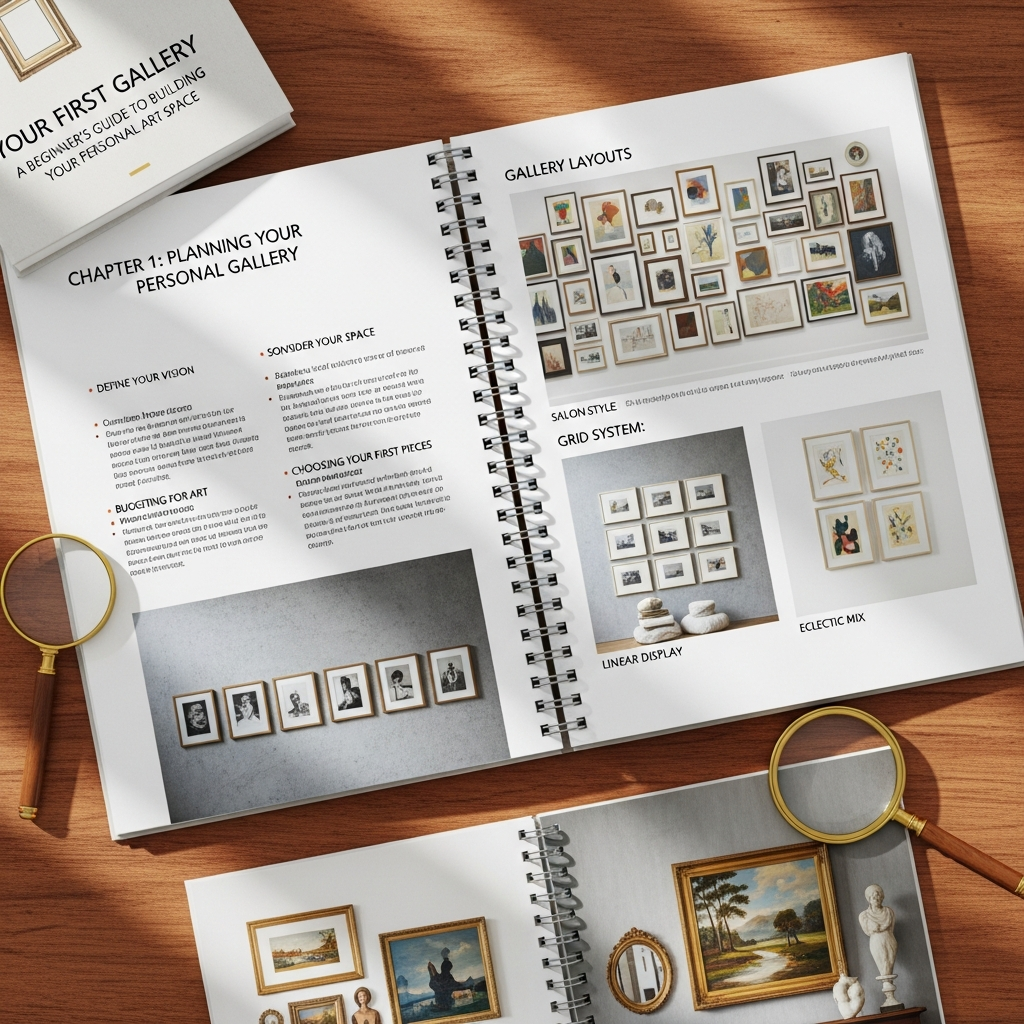
Layout Strategies: Salon Style vs. Minimalist
There are two primary ways to organize your gallery layout:
- Minimalist/Linear: One or two large pieces on a wall, giving them plenty of “breathing room.” This creates a sense of calm and focus.
- Salon Style (Gallery Wall): A floor-to-ceiling arrangement of various sizes and mediums. This is excellent for smaller spaces and allows you to tell a complex, eclectic story.
6. Curating for Longevity and Investment
While you should primarily buy art because you love it, it is wise to consider the investment aspect of your private art collection. Investing in art requires research into an artist’s career trajectory, exhibition history, and secondary market demand.
Keep meticulous records of every purchase. Save invoices, artist biographies, and certificates of authenticity in a dedicated physical or digital folder. This documentation is essential if you ever decide to sell a piece or need to file an insurance claim.
7. Maintenance and Care
Your personal art gallery is a living entity that requires ongoing care. Environmental factors are the biggest threat to your collection.
- Humidity Control: Aim for a stable relative humidity of 40–50%. Extreme fluctuations can cause wood frames to warp and canvases to stretch or shrink.
- Dusting: Use a soft, natural hair brush (like a goat hair brush) to gently remove dust from frames and canvases. Never use cleaning chemicals or water on an original painting.
- Rotation: Occasionally move your pieces to different rooms. This not only gives you a fresh perspective on the work but also limits prolonged exposure to specific light sources.
Conclusion
Building a personal art gallery is a deeply rewarding endeavor that evolves over a lifetime. It is a process of curation that balances aesthetic intuition with technical precision. By focusing on original art, investing in quality framing, and mastering art lighting, you create a space that does more than just fill empty walls—it tells your story.
Start small, stay curious, and remember that the best collections are those that evoke a genuine emotional response every time you walk into the room. You are now ready to take the first step in your journey as an art collector.
Frequently Asked Questions (FAQ)
1. How much money do I need to start a personal art gallery?
You can start with as little as $100–$500 by purchasing works from emerging artists, limited edition prints, or local art students. The key is consistency rather than a large initial layout.
2. Can I build a gallery in a small apartment?
Absolutely. Use “Salon Style” hanging to maximize vertical space. Small apartments often feel more luxurious when they feature a well-curated gallery wall.
3. Is it okay to mix different styles of art?
Yes! Mixing contemporary art with traditional pieces or photography with oil paintings adds depth and visual interest. A common element like matching frame colors can help unify diverse styles.
4. How do I know if a piece of art is a good investment?
Look for artists who are actively exhibiting in galleries, receiving press coverage, or winning awards. However, never buy art only for investment; the primary value should always be your personal enjoyment.
5. Should I hire a professional to hang my art?
If you have very large, heavy, or extremely valuable pieces, hiring a professional art handler is recommended to ensure safety and perfect alignment. For most residential galleries, a DIY approach with the right tools is sufficient.