How to Build a Personal Art Gallery: The Ultimate Guide for Beginners
Building a personal art gallery is one of the most rewarding endeavors a homeowner or art enthusiast can undertake. It is more than just hanging pictures on a wall; it is about creating a curated environment that reflects your personality, history, and aesthetic values. Whether you are starting with a single empty wall or an entire room, the process of transforming a living space into a private sanctuary of visual expression requires careful planning and a strategic approach.
Understanding the Philosophy of a Personal Art Gallery
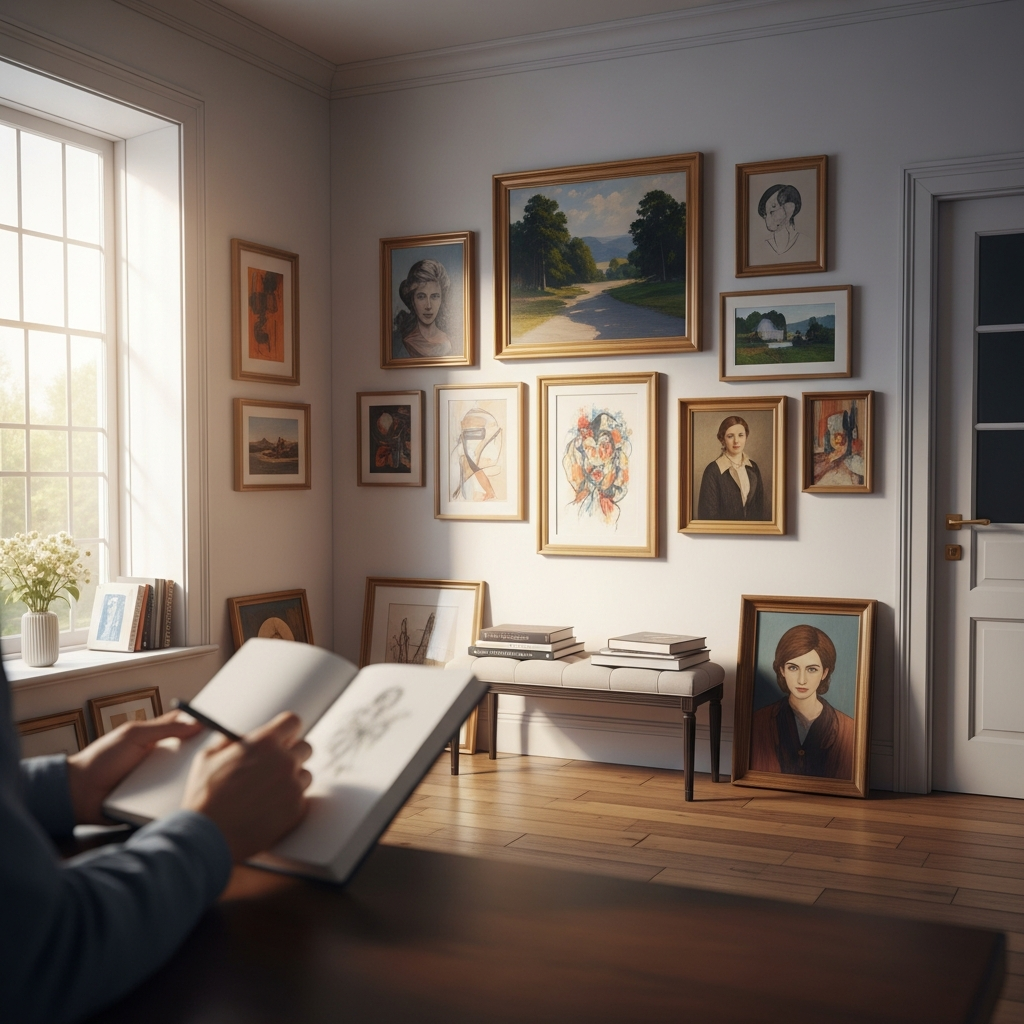
Before you purchase your first piece or hammer a single nail into the wall, you must define what a personal art gallery means to you. Unlike a public museum that aims for historical objectivity, your personal gallery is a subjective narrative of your life. It serves as a visual diary that communicates your tastes to anyone who enters your home.
A successful personal gallery does not require a million-dollar budget or a degree in art history. It requires intentionality. You should consider whether you want your collection to follow a specific theme, such as contemporary minimalism, or if you prefer an eclectic mix that spans different eras and mediums. Establishing this vision early will prevent impulsive purchases that do not harmonize with your overall aesthetic.
Furthermore, think about the emotional impact you want the space to have. Do you want a gallery that feels energetic and vibrant, or one that promotes serenity and contemplation? Your answer will dictate everything from the color of the frames to the intensity of the lighting you eventually install.
Establishing Your Art Acquisition Budget
One of the biggest misconceptions about building an art gallery is that it is exclusively for the wealthy. In reality, art collecting is accessible at almost every price point if you know where to look. Setting a budget is essential because it helps you narrow down your search and ensures that you can afford the secondary costs, such as framing and lighting.
- Entry-Level (Under $500): Focus on high-quality limited edition prints, photography, and works by emerging local artists or art students.
- Mid-Tier ($500 – $5,000): You can begin looking at original paintings on canvas, small-scale sculptures, and works from established regional artists.
- Investment Grade ($5,000+): At this level, you are often looking at secondary market pieces, works by internationally recognized artists, and large-scale installations.
Remember to allocate approximately 15% to 20% of your total budget for archival framing and professional installation tools. A cheap frame can actually damage a valuable piece of art over time due to acidic materials, so investing in quality presentation is just as important as the art itself.
Sourcing Art: Where to Find Your Masterpieces
Finding the right pieces for your gallery is an adventure that can take you from local street fairs to high-end digital marketplaces. For beginners, the sheer volume of options can be overwhelming. It is helpful to categorize your sourcing into three main channels: local, digital, and professional.
Local Art Fairs and Open Studios
Visiting local art fairs allows you to meet the artists in person. This adds a layer of provenance and personal connection to the piece. When you know the story behind the work, it becomes a much more meaningful addition to your gallery. Additionally, purchasing directly from an artist often means more of your money goes toward supporting their craft.
Online Art Marketplaces
Websites like Saatchi Art, Artsy, and even Etsy have revolutionized how beginners build collections. These platforms allow you to filter by size, medium, color, and price. They provide a global reach, enabling you to discover a painter in Berlin or a photographer in Tokyo from the comfort of your living room. Always check the shipping and return policies before committing to a large purchase online.
Thrift Stores and Estate Sales
For those who love the “thrill of the hunt,” thrift stores and estate sales can yield incredible treasures. You might find a vintage lithograph or a mid-century oil painting hidden behind layers of dust. While these finds often require a bit of restoration or re-framing, they add a unique, historical character to your personal gallery that modern pieces cannot replicate.
Curating Your Collection: The Art of Selection
Curation is the process of selecting and organizing pieces to create a cohesive whole. As a beginner, you might be tempted to buy everything you like, but a gallery needs a “Golden Thread”—a common element that ties the collection together. This could be a specific color palette, a recurring subject matter (like landscapes), or a consistent medium.
However, do not be afraid of contrast. A large, bold abstract painting can look stunning when placed near a delicate, detailed charcoal sketch. The key is to find a balance between harmony and tension. If every piece is the same size and color, the gallery may feel monotonous. If they are too different without any commonality, the space may feel chaotic.
Consider the “Storytelling” aspect of your gallery. Arrange your pieces in a way that leads the viewer’s eye through the room. You can group works chronologically based on when you acquired them, or geographically based on where the artists are from. This narrative approach makes the gallery more engaging for guests.
Preparing the Physical Space
The walls of your home are the “canvas” for your gallery. Before hanging anything, assess the condition of your walls. A fresh coat of paint can make a world of difference. Most professional galleries use neutral tones like “Gallery White” or soft greys to ensure the wall doesn’t compete with the artwork. However, dark, moody colors like navy or forest green can make gold-framed or brightly colored art “pop” dramatically.
You must also consider the environmental factors of the room. Avoid hanging sensitive works, such as watercolors or photographs, in direct sunlight, as UV rays will cause permanent fading. Similarly, keep art away from high-humidity areas like bathrooms or directly above heat sources like fireplaces, as extreme temperature fluctuations can warp canvases and damage paper.
Traffic flow is another critical consideration. Ensure that your art is placed in areas where people can stand back and admire it without blocking doorways or hallways. If you are displaying sculptures, make sure they are placed on sturdy pedestals or in alcoves where they won’t be accidentally knocked over.
Mastering Gallery Lighting
Lighting is perhaps the most overlooked element in home galleries, yet it is what separates a professional-looking display from a casual one. The goal is to highlight the art without creating glare or heat damage. LED lighting is the gold standard for modern galleries because it produces very little heat and no UV radiation.
Types of Gallery Lighting
- Track Lighting: Offers the most flexibility, allowing you to move and aim individual lamps as your collection grows and changes.
- Picture Lights: These are mounted directly above or on the frame of a specific piece, providing an intimate, focused glow.
- Recessed Spotlights: Installed in the ceiling, these provide a clean, minimalist look while directing light precisely where it is needed.
When choosing bulbs, look for a high Color Rendering Index (CRI) of 90 or above. This ensures that the colors of the artwork appear as the artist intended. Aim for a color temperature between 2700K and 3000K for a warm, inviting atmosphere, or 4000K for a cooler, more contemporary museum feel.
The Technical Side: Framing and Protection
A frame does more than just hold the art; it protects it from the environment and enhances its visual appeal. For a beginner, understanding archival framing is vital. This involves using acid-free matboards and backing materials that won’t “burn” or yellow the paper over time.
When it comes to glazing (the glass or acrylic covering), you have several options. Standard glass is heavy and reflective. Museum Glass or UV-protective acrylic is highly recommended for valuable pieces because it blocks up to 99% of harmful UV rays and features an anti-reflective coating that makes the glass almost invisible.
For canvases, you might opt for a “floater frame,” which leaves a small gap between the edge of the canvas and the frame, giving the illusion that the artwork is hovering. This is a very popular choice for contemporary art as it shows off the entire painted surface, including the edges.
Step-by-Step Installation Guide
Hanging your art is the final, most satisfying step. To achieve a professional look, follow the “57-inch Rule.” This means the center of your artwork should be exactly 57 inches from the floor, which is the average human eye level used in most professional galleries.
Essential Tools for Installation
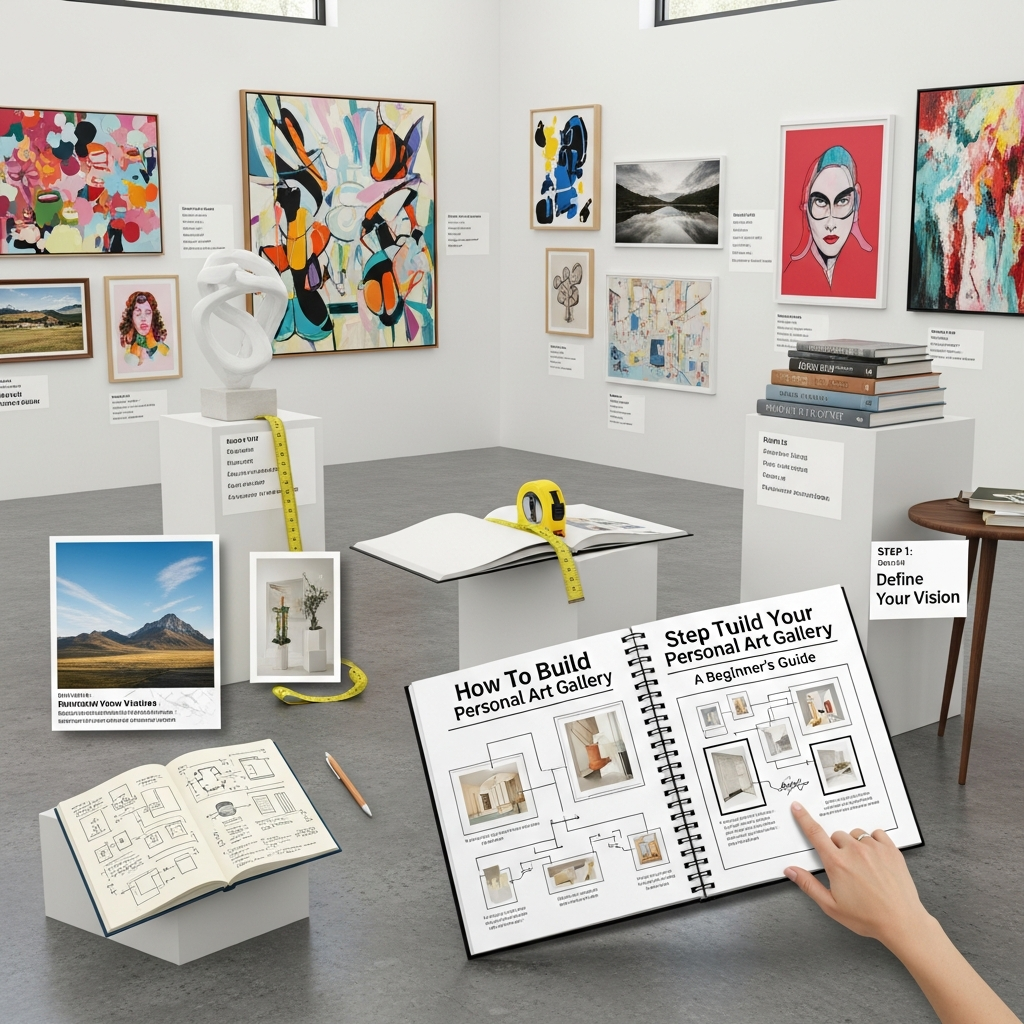
- Measuring tape and a pencil.
- A bubble level or laser level.
- Hammer and a variety of picture hooks (rated for different weights).
- Wall anchors for heavy pieces.
- Blue painter’s tape (for marking walls without damaging paint).
The Process
- Layout: Lay your pieces on the floor in front of the wall to test the arrangement.
- Measure: Find the center point of the wall and the center point of the art.
- Mark: Use the painter’s tape to mark where the top of the frame will sit.
- Calculate: Measure the distance from the hanging wire (when pulled taut) to the top of the frame. Subtract this from your top mark to find exactly where the nail should go.
- Hang: Secure the hook, hang the piece, and use your level to ensure it is perfectly straight.
Maintaining and Growing Your Gallery
A personal art gallery is a living entity. As your tastes evolve, you may find yourself rotating pieces or moving them to different rooms. This “refreshing” of the gallery keeps the space feeling dynamic. Proper maintenance includes dusting frames with a soft microfiber cloth and checking the tension of hanging wires once a year.
Documenting your collection is also a professional habit to develop early. Keep a digital folder with receipts, certificates of authenticity, and photographs of each piece. This is crucial for insurance purposes and helps track the history of your collection. As you become more confident, you might even consider commissioning a specific piece from an artist to fill a particular niche in your gallery.
Frequently Asked Questions
How do I start an art gallery with no experience?
Start small by identifying a style you love. Visit local galleries and museums to see what resonates with you. Begin your collection with affordable prints or local works, and focus on learning about framing and lighting as you go.
What is the best height to hang art?
The industry standard is to hang art so that the center of the piece is 57 inches (145 cm) from the floor. This ensures the art is at eye level for most people and creates a consistent horizontal line across your gallery.
Should all my frames match?
Not necessarily. Matching frames create a very clean, organized look (often called a grid gallery). However, mixing different frame styles can add character and an “evolved” feel to your collection. The key is to ensure the frames complement the art first, and the room second.
How do I protect my art from fading?
Keep art out of direct sunlight and use UV-protective glass or acrylic when framing. Using LED bulbs instead of incandescent or halogen lights also reduces the risk of heat and light damage.
Can I build a gallery in a small apartment?
Absolutely. In small spaces, you can use “vertical galleries” or floor-to-ceiling arrangements to maximize wall space. Using smaller pieces and “salon-style” hanging (grouping many items together) works exceptionally well in compact environments.
Conclusion
Building a personal art gallery is a journey of self-discovery and aesthetic refinement. By following these steps—from defining your vision and budgeting to mastering the technicalities of lighting and installation—you can create a professional-grade display that brings joy and inspiration to your daily life. Remember that your gallery is never truly “finished”; it is a reflection of your ongoing journey through the world of art. Start today, and let your walls tell your story.