The Ultimate Guide to Art Galleries and Exhibitions in New York for Beginners
New York City stands as the undisputed capital of the global art world. With over 1,500 galleries scattered across its five boroughs, the sheer volume of art galleries and exhibitions in New York can feel overwhelming for a newcomer. Whether you are a curious tourist or a local resident looking to deepen your cultural appreciation, navigating this vast landscape requires a bit of insider knowledge.
This comprehensive guide is designed to demystify the New York art scene. You will learn where to go, how to behave, and how to interpret what you see. From the high-ceilinged spaces of Chelsea to the experimental hubs in Brooklyn, your journey into the world of contemporary art starts here.
Why New York City is the Epicenter of Global Art
Before diving into the “how,” it is essential to understand the “why.” New York City became the global center for art following World War II, snatching the mantle from Paris. Today, it hosts the world’s most prestigious auction houses, legendary museums, and a density of commercial galleries that no other city can match.
When you visit NYC art exhibitions, you are not just looking at pictures on a wall; you are witnessing the primary market where art history is made. The works you see today in a small Chelsea gallery might end up in the Museum of Modern Art (MoMA) a decade from now.
Understanding the Geography of the NYC Art Scene
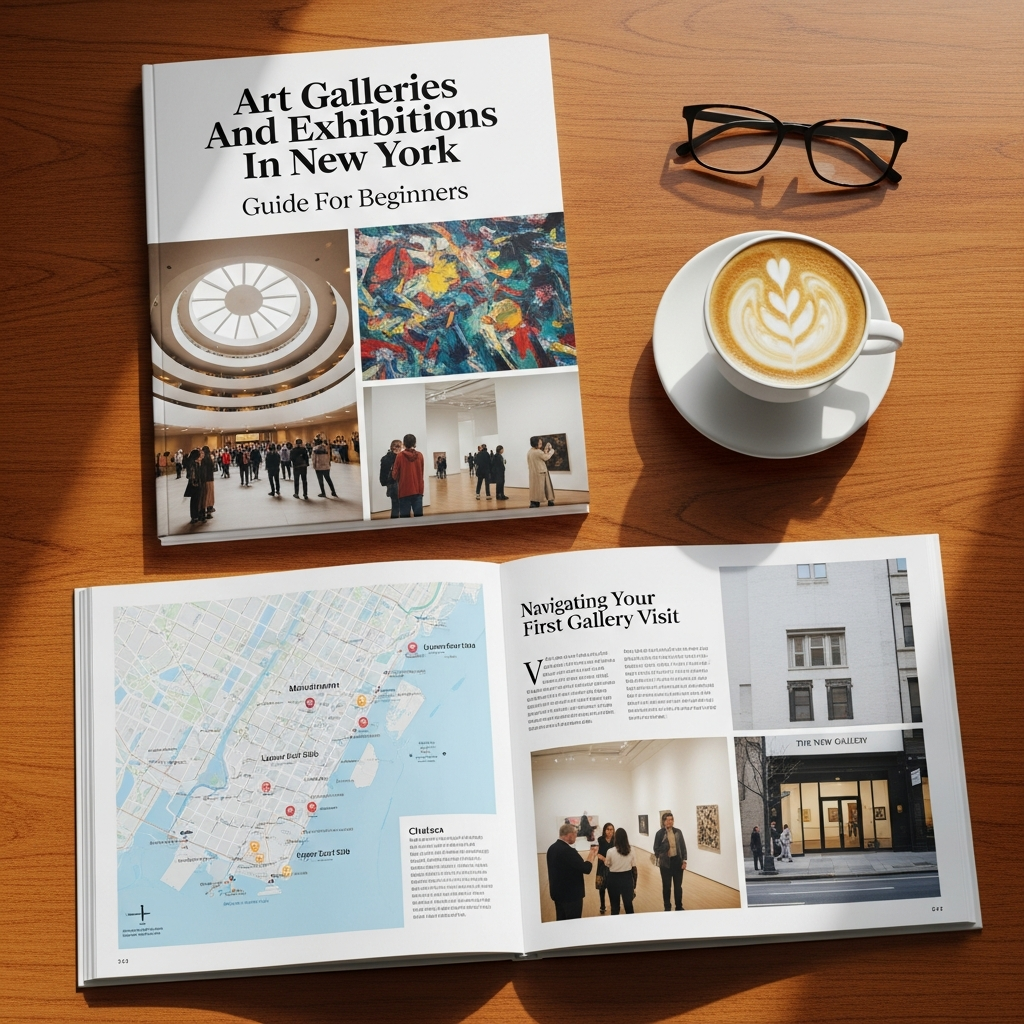
The New York art world is divided into distinct neighborhoods, each with its own “personality” and specialty. Knowing these districts will help you plan your visit efficiently.
1. Chelsea: The Global Hub
Chelsea is the undisputed heavyweight champion of the art world. Located between 18th and 30th Streets and 10th and 11th Avenues, this area houses hundreds of galleries.
- The Vibe: High-end, industrial, and polished.
- What to Expect: Large-scale installations, world-renowned artists, and “blue-chip” galleries like Gagosian, David Zwirner, and Hauser & Wirth.
- Pro Tip: Most galleries here are free to enter and are located on the ground floor or in large converted warehouse buildings.
2. The Upper East Side (UES): Elegance and History
If Chelsea is the modern heart, the Upper East Side is the sophisticated soul. Here, galleries are often located in beautiful townhouses.
- The Vibe: Quiet, formal, and prestigious.
- What to Expect: Secondary market works (art that has been owned before), historical masterpieces, and high-end contemporary art.
- Key Names: Gagosian (980 Madison), Acquavella Galleries, and Almine Rech.
3. The Lower East Side (LES): The Cutting Edge
For those who want to see what is happening right now, the Lower East Side is the place to be.
- The Vibe: Gritty, experimental, and youthful.
- What to Expect: Emerging artists, smaller spaces, and more provocative themes.
- Key Names: Perrotin, Rachel Uffner, and Derek Eller Gallery.
4. Tribeca: The Newest Powerhouse
In recent years, many top-tier galleries have moved from Chelsea to Tribeca, seeking the neighborhood’s unique architectural charm.
- The Vibe: Spacious, trendy, and increasingly influential.
- What to Expect: A mix of established and mid-career artists.
- Key Names: Bortolami, James Cohan, and Grimm Gallery.
The Difference Between Museums and Commercial Galleries
As a beginner, you must distinguish between these two types of institutions to manage your expectations and budget.
Art Museums (The Met, MoMA, Whitney):
- Purpose: To preserve art history and educate the public.
- Entry Fee: Usually requires a paid ticket (though some offer “pay-as-you-wish” for locals).
- Experience: Massive crowds, gift shops, and art that is strictly not for sale.
Commercial Art Galleries:
- Purpose: To represent artists and sell their work to collectors.
- Entry Fee: Almost always FREE and open to the public.
- Experience: Intimate, quiet, and the art is available for purchase (if you have the budget!).
How to Find Current Exhibitions
The NYC art scene moves fast. Most exhibitions last only 4 to 6 weeks. To find out what is currently showing, you should use the following digital tools:
- See Saw Map: An essential app for gallery-hopping. It lists current shows by neighborhood and provides a map to guide you.
- Artforum Guide: A more scholarly listing of top-tier exhibitions worldwide, including a robust New York section.
- GalleriesNow: Provides 360-degree virtual tours and comprehensive lists of current and upcoming shows.
Art Gallery Etiquette: How to Act Like a Pro
Many beginners feel intimidated walking into a quiet, white-walled gallery. However, you have every right to be there. Follow these unwritten rules to feel more comfortable:
- The “Front Desk” Interaction: When you enter, you will usually see someone sitting at a desk (often jokingly called “gallery sitters”). You do not need to check in. A simple nod or “hello” is sufficient.
- The Press Release: Look for a stack of papers near the entrance. This is the press release. Pick one up; it contains the “story” of the exhibition and a list of the works with their titles.
- Photography: Most galleries allow non-flash photography for social media. However, always look for a “no photography” sign or ask the front desk if you are unsure.
- Do Not Touch: This should go without saying, but never touch the artwork. Even the oils from your skin can damage a painting or sculpture.
- Asking About Prices: It is perfectly acceptable to ask for a “price list.” Most galleries keep a discrete folder at the front desk. Even if you aren’t buying, seeing the prices can be an educational experience.
Step-by-Step Guide to Planning Your First Gallery Crawl
If you are ready to hit the pavement, follow this step-by-step plan for a successful day of exploring art galleries and exhibitions in New York.
Step 1: Choose One Neighborhood
Do not try to see Chelsea and the Lower East Side on the same day. You will get “art fatigue.” Pick one area and stick to it. Chelsea is the best starting point for beginners due to the density of spaces.
Step 2: Check the Calendar
Most galleries are open Tuesday through Saturday, 10:00 AM to 6:00 PM. They are almost always closed on Sundays and Mondays. If you go on a Thursday evening, you might stumble upon “Opening Receptions,” where you can meet the artist and enjoy a glass of wine.
Step 3: Dress Comfortably
Gallery hopping involves a lot of walking. While the art world is fashionable, comfort is key. Wear stylish but sensible shoes.
Step 4: The “Three-Room” Rule
In a large gallery, don’t feel pressured to stare at every single piece. Use the “three-room” rule: scan the room, find one piece that speaks to you, and spend three minutes looking at that one piece.
Major Annual Art Events You Shouldn’t Miss
Beyond the year-round gallery shows, New York hosts massive art fairs that bring galleries from all over the world into one building.
- The Armory Show (September): One of the city’s most significant fairs, focusing on 20th and 21st-century art.
- Frieze New York (May): Held at The Shed in Hudson Yards, this is a high-fashion, high-energy fair featuring top international galleries.
- The Winter Show (January): Perfect for those interested in antiques, fine art, and design.
- Asia Week New York (March): A city-wide celebration of Asian art with specialized exhibitions and auctions.
How to Experience Art in NYC on a Budget
New York is expensive, but its art scene is surprisingly accessible if you know where to look.
- Free Gallery Entry: As mentioned, commercial galleries are free. You can spend an entire day seeing world-class art without spending a dime.
- Public Art Installations: Organizations like the Public Art Fund and Times Square Arts bring massive sculptures and digital displays to public spaces like Central Park, the High Line, and Rockefeller Center.
- Museum Free Hours: Many museums offer specific times for free entry. For example, the Whitney Museum offers free admission on Friday evenings and the second Sunday of every month (registration usually required).
Interpreting Contemporary Art: Tips for the Layperson
One of the biggest hurdles for beginners is the “I could have done that” or “I don’t get it” feeling. Here is how to approach difficult contemporary art:
- Read the Context: Read the press release. Contemporary art is often about the idea or the process as much as the final visual product.
- Ask “Why Now?”: Art often reflects the current social, political, or technological climate. Ask yourself why the artist chose to make this specific work today.
- Trust Your Instincts: You don’t have to like everything. It is perfectly valid to dislike a famous artist’s work. The goal is to engage with it, not necessarily to love it.
Conclusion
Exploring art galleries and exhibitions in New York is one of the most rewarding cultural experiences the city has to offer. It allows you to step out of the frantic pace of Manhattan and into spaces of reflection, provocation, and beauty.
Remember, the art world is not a closed club. It is a conversation, and by walking through those gallery doors, you are becoming a part of it. Start with a single block in Chelsea, keep an open mind, and let the creativity of the world’s greatest artists inspire you.
Frequently Asked Questions (FAQ)
1. Do I need to make an appointment to visit an art gallery in New York?
Generally, no. Most commercial galleries are open to the public during their standard hours (Tue-Sat, 10-6). However, some very small or exclusive “private” galleries may require an appointment, but these will usually state this clearly on their website.
2. Is there a dress code for visiting NYC art galleries?
There is no formal dress code. You will see people in everything from business suits to casual streetwear. As long as you are dressed respectfully, you will fit in.
3. Can I buy the art I see in a gallery?
Yes, that is the primary purpose of a commercial gallery. If you are interested in a piece, you can ask the front desk for a price list or “availability.” Be aware that prices in top-tier galleries can range from a few thousand to millions of dollars.
4. What is a “Gallery Opening”?
A gallery opening (or vernissage) is a party held on the first night of a new exhibition. They are usually held on Thursday nights from 6:00 PM to 8:00 PM. They are free, open to the public, and a great way to see the artist and the local art community.
5. Are children allowed in art galleries?
Yes, children are allowed. However, you must keep a very close eye on them to ensure they do not touch the artwork or run in the quiet spaces. Some exhibitions may contain “mature themes,” so it is wise to do a quick scan of the room first.