Aesthetic Pencil Sketch Inspiration: The Ultimate Guide for Beginners
Pencil sketching is more than just a hobby; it is a profound way to translate the world’s beauty onto a two-dimensional surface. Whether you are looking to fill your sketchbook with dreamy landscapes or delicate portraits, finding the right aesthetic pencil sketch inspiration is the first step toward artistic fulfillment.
In this comprehensive guide, you will explore the foundational techniques, essential tools, and creative prompts needed to elevate your art. We will delve deep into the world of graphite, light, and shadow to help you master the “aesthetic” look that defines modern visual storytelling.
The Timeless Charm of Pencil Sketching
There is something inherently intimate about a pencil and a piece of paper. Unlike digital art, which offers infinite undos, pencil sketching requires a connection with the medium. The “aesthetic” style, often characterized by soft shading, minimalist lines, and emotive subjects, has seen a resurgence in popularity due to its calming and accessible nature.
For a beginner, the goal is not perfection but expression. By understanding how to manipulate graphite, you can create pieces that resonate with viewers on an emotional level.
Essential Supplies: Building Your Aesthetic Sketching Toolkit
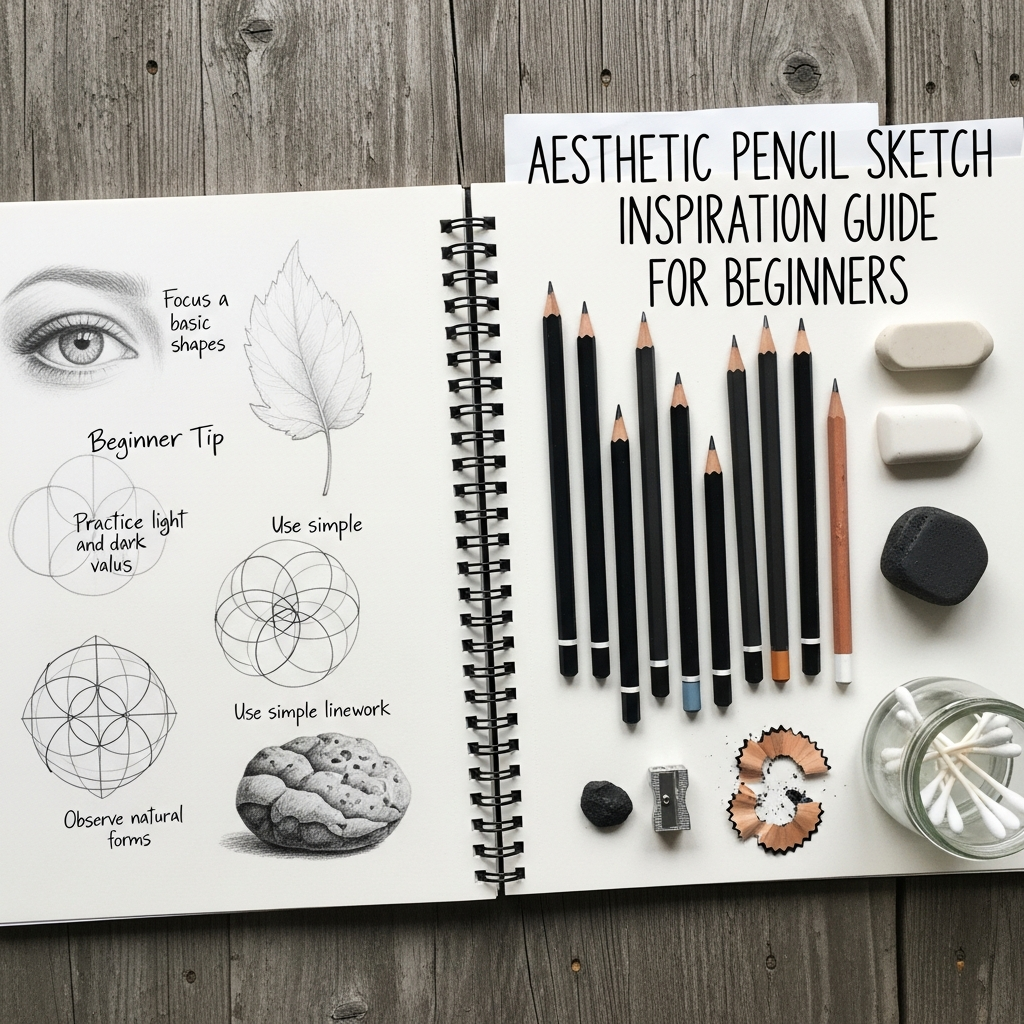
Before you begin your creative journey, you must equip yourself with the right tools. While you can start with a standard office pencil, professional-grade materials will significantly improve your results.
Choosing the Right Graphite Pencils
Graphite pencils are categorized by their hardness and blackness.
- H Pencils (Hard): These produce light, fine lines. They are ideal for initial outlines and technical details.
- B Pencils (Black/Soft): These are darker and easier to smudge. They are essential for deep shadows and adding “soul” to your sketch.
- HB Pencil: The middle ground, perfect for general sketching.
Paper Quality and Texture
The “tooth” or texture of the paper determines how much graphite it can hold. For aesthetic drawing ideas, a smooth or medium-texture paper (around 120-160 gsm) is usually preferred. It allows for soft blending while still being durable enough for multiple layers of shading.
Erasers and Blending Tools
- Kneaded Eraser: This is a must-have. You can mold it into any shape to lift highlights or soften dark areas without damaging the paper.
- Blending Stumps (Tortillons): These are used to create smooth gradients, giving your work that soft, ethereal aesthetic.
Fundamental Pencil Drawing Techniques
To turn your creative inspiration into a finished masterpiece, you must master several core techniques. These form the building blocks of every great sketch.
Mastering the Pencil Grip
How you hold your pencil changes the stroke. For detailed work, hold it close to the tip like a writing pen. For broad shading and flowing lines, hold it further back to allow for more wrist and arm movement.
Shading and Value Scales
Value refers to the lightness or darkness of a color. In pencil sketching, you create value through pressure and layering.
- Hatching: Parallel lines drawn close together.
- Cross-Hatching: Overlapping sets of parallel lines to create darker values.
- Stippling: Using small dots to create texture and depth.
- Scumbling: Small, circular scribbles that create a soft, textured look.
The Power of Negative Space
Sometimes, what you don’t draw is just as important as what you do. Using negative space helps define the edges of your subject without using harsh outlines, contributing to a more professional and minimalist aesthetic.
Finding Your Aesthetic: Popular Sketching Styles
“Aesthetic” is a broad term. To find your personal style, consider these popular categories:
Minimalist Line Art
This style focuses on simplicity. Using a single, continuous line or a few well-placed strokes, you can capture the essence of a face or a botanical form. It is clean, modern, and highly effective for beginners.
Soft Realism and Portraits
Soft realism involves using smooth blending to create lifelike skin textures and expressive eyes. The focus is on capturing the “vibe” or emotion of the subject rather than every single pore.
Nature and Botanical Sketches
Flowers, leaves, and landscapes are classic sources of aesthetic pencil sketch inspiration. They offer organic shapes that are forgiving for beginners and provide excellent practice for texture and light.
Step-by-Step: Creating Your First Aesthetic Pencil Sketch
Follow this structured approach to bring your ideas to life.
Stage 1: Observation and Light Outlining
Start by observing your subject. Instead of looking at the object as a whole, see it as a collection of basic geometric shapes (circles, triangles, rectangles). Use a 2H or HB pencil to lightly map out these shapes on your paper. Tip: Keep your pressure extremely light so you can erase mistakes easily.
Stage 2: Defining Shapes and Proportions
Once the basic structure is there, start refining the contours. Look for the specific curves and angles that make your subject unique. Ensure the proportions are correct before moving on to shading, as it is much harder to fix structural issues later.
Stage 3: Adding Depth with Shading
Identify your light source. Where is the light coming from? The areas furthest from the light will be the darkest. Start with your lighter B pencils and gradually build up to your 4B or 6B for the deepest shadows. Use your blending stump to soften the transitions.
Stage 4: Highlighting and Final Touches
Use your kneaded eraser to “draw” the highlights. Dab it onto areas where the light hits directly, such as the tip of a nose or the edge of a leaf. Finally, add sharp details—like eyelashes or veins in a leaf—to make the drawing pop.
Aesthetic Sketching Inspiration Ideas for Beginners
If you are staring at a blank page, here are some curated prompts to get your creativity flowing:
- The Human Element: A close-up of an eye with a reflection, two hands reaching for each other, or a messy bun hairstyle.
- Botanical Wonders: A single wilted rose, a cluster of eucalyptus leaves, or a miniature terrarium.
- Still Life with a Twist: A steaming cup of coffee, an open vintage book with pressed flowers, or a pair of worn-out sneakers.
- Celestial Themes: A crescent moon adorned with stars, a sun peeking through clouds, or a mystical crystal ball.
Overcoming Creative Blocks: How to Stay Inspired
Every artist faces “blank page syndrome.” To keep your momentum:
- Keep a Sketchbook: Carry a small notebook everywhere. Sketch small things you see—a hydrant, a bird, a stranger’s hat.
- Limit Your Time: Give yourself 10 minutes for a “quick sketch.” Removing the pressure of perfection often leads to the best results.
- Use References: Sites like Pinterest or Unsplash are goldmines for visual references. Don’t be afraid to use them to learn anatomy or lighting.
Tips for Improving Your Pencil Art Consistency
- Draw Every Day: Even 15 minutes of practice will yield better results than a 5-hour session once a month.
- Analyze Your Work: Look at your old sketches. Identify what you like and what needs improvement.
- Study Light and Shadow: Pay attention to how light falls on objects in real life. Understanding the “Core Shadow” and “Reflected Light” is the secret to 3D realism.
- Experiment with Different Pencils: Don’t stick to just one. Experimenting with charcoal or colored pencils can provide fresh perspectives.
Frequently Asked Questions (FAQ)
What is the best pencil for a beginner to start sketching?
An HB pencil is the most versatile starting point. However, a small set containing 2H, HB, 2B, and 4B will give you a much better range of values for aesthetic shading.
How do I stop my pencil sketches from smudging?
You can place a clean sheet of paper under your hand while you draw to prevent your palm from rubbing against the graphite. Once finished, use a “fixative spray” to seal the drawing.
Do I need to be good at drawing to start aesthetic sketching?
Not at all. The “aesthetic” style often embraces imperfection. Focus on the process and the mood you want to create rather than technical perfection.
How do I make my sketches look “aesthetic”?
Focus on soft gradients, interesting compositions (using the rule of thirds), and choosing subjects that evoke a sense of peace, nostalgia, or mystery.
Conclusion
Embarking on a journey into aesthetic pencil sketch inspiration is a rewarding endeavor that hones your patience and observation skills. By mastering the basic supplies, practicing fundamental shading techniques, and staying consistent, you will soon find yourself creating art that is not only visually pleasing but also deeply personal.
Remember, every master was once a beginner. Pick up your pencil, find a quiet corner, and let your imagination take shape on the page. Your unique artistic voice is waiting to be discovered.