The Ultimate Packaging Design Inspiration Guide for Beginners: Crafting Brand Identity
In the modern retail landscape, your product’s packaging is often the first and most critical physical touchpoint between your brand and your customer. It is much more than a protective container; it is a silent salesman, a storyteller, and a key component of your visual identity. For beginners, the world of packaging design can feel overwhelming, but with the right inspiration and fundamental knowledge, you can create designs that truly resonate.
This comprehensive packaging design inspiration guide for beginners is designed to take you from a blank canvas to a shelf-ready masterpiece. Whether you are launching a small e-commerce brand or exploring a career in graphic design, understanding the nuances of brand packaging is essential for success.
Why Packaging Design Matters More Than Ever
Before diving into the aesthetics, you must understand the “why.” Studies show that most consumers make a purchasing decision within seven seconds of seeing a product. This phenomenon, often called “shelf appeal,” is driven entirely by the effectiveness of your retail packaging.
Effective packaging serves three primary purposes: protection, information, and persuasion. In an era dominated by social media, the unboxing experience has also become a powerful marketing tool. A well-designed box encourages customers to share their purchase online, providing your brand with free organic reach and social proof.
Understanding the Core Principles of Packaging Design
Great design is not accidental; it is a result of adhering to specific principles that balance art and science. As a beginner, focusing on these core pillars will help you maintain clarity and purpose in your work.
1. Form Follows Function
The most beautiful box in the world is a failure if it cannot protect the product inside or if it is too difficult for the consumer to open. You must consider the packaging materials carefully. Is the product fragile? Does it need to be airtight? Your design must accommodate these functional requirements first.
2. Visual Communication and Brand Storytelling
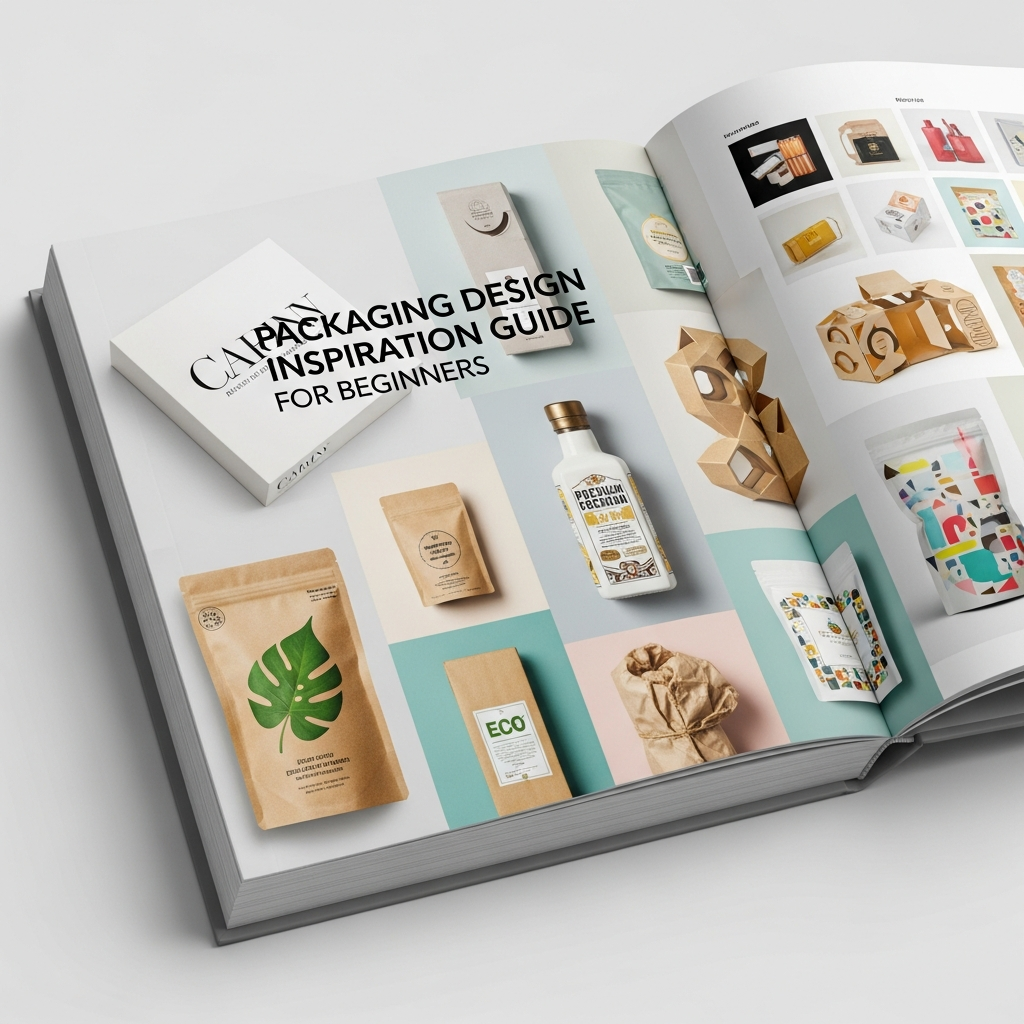
Your packaging should tell the story of your brand without saying a word. Through the use of typography in design, color palettes, and imagery, you communicate your brand’s values. For instance, a luxury brand might use minimalist layouts and gold foil, while an organic brand might opt for earthy tones and recycled textures.
3. Consumer Psychology
Colors and shapes evoke specific emotions. Consumer psychology plays a massive role in how a package is perceived. Rounded shapes are often seen as friendly and approachable, while sharp, angular designs suggest precision and high-tech performance. Understanding these subtle cues is vital for any packaging design inspiration guide for beginners.
Finding Your Inspiration: Where to Look?
Inspiration doesn’t happen in a vacuum. To create something original, you must first immerse yourself in the world of existing design. Here are the best places to start your research:
- Digital Portfolios: Websites like Behance and Dribbble are goldmines for high-quality brand packaging concepts. Use keywords like “minimalist packaging” or “luxury box design” to narrow your search.
- The Dieline: This is the industry standard for packaging news and inspiration. It showcases the best commercial designs from around the globe.
- Pinterest: Create mood boards to collect textures, color swatches, and typography examples that align with your vision.
- Physical Retail Stores: Visit high-end boutiques and local supermarkets. Observe how products are stacked, how they catch the light, and which ones stand out from a distance.
Key Elements of Effective Packaging Design
To build a professional-looking package, you need to master several individual elements. Let’s break them down.
Color Theory and Its Impact
Color is the first thing a brain perceives. Using color theory effectively can guide a customer’s mood. – Red: Excitement, passion, and hunger (common in food packaging). – Blue: Trust, reliability, and calmness. – Green: Health, nature, and eco-friendly design. – Black: Luxury, elegance, and mystery.
Typography: Choosing the Right Font
The text on your package must be legible but also stylistic. Your choice of typography should reflect the product’s personality. A serif font might suggest tradition and reliability, while a bold sans-serif font feels modern and energetic. Ensure there is a clear hierarchy so the most important information (like the product name) is seen first.
Material Selection and Sustainability
Modern consumers are increasingly conscious of their environmental footprint. Incorporating sustainable packaging is no longer just a trend; it is a business necessity. Consider using eco-friendly design elements such as biodegradable plastics, recycled cardboard, or soy-based inks. Not only is this better for the planet, but it also adds a layer of “ethical value” to your brand.
Step-by-Step Guide to Designing Your First Package
If you are ready to start your first project, follow this structured workflow to ensure professional results.
Step 1: Research and Market Analysis
Identify your target audience. Who are they? What do they value? Look at your competitors and find a “gap” in their design that you can fill. This stage is about finding your unique visual identity.
Step 2: Defining the Die-line
A die-line is the 2D pattern of your package before it is folded. It shows where the cuts, folds, and bleeds are located. You can often find standard die-line templates online, or you can create a custom one if your product has a unique shape.
Step 3: Creating the Visual Layout
Using software like Adobe Illustrator (which is industry standard for vector graphics), begin placing your elements. Start with the logo, then add the product name, and finally the regulatory information (weight, ingredients, barcodes). Keep minimalist packaging principles in mind—don’t clutter the space.
Step 4: Prototyping and Testing
Never go straight to the printer. Print your design on a home printer, cut it out, and assemble it. This prototyping phase allows you to see if the scale is correct and if the text is readable in a real-world setting.
Current Trends in Packaging Design (2024-2025)
Staying updated with trends ensures your design feels contemporary and relevant. Here are the top trends currently dominating the industry:
- Minimalism and “Clean” Design: This trend focuses on white space and simple typography. It conveys a sense of honesty and premium quality.
- Vintage and Retro Revival: Many brands are using “throwback” aesthetics to tap into nostalgia, using muted colors and classic illustrations.
- Interactive and Smart Packaging: Using QR codes that lead to AR (Augmented Reality) experiences or digital brand storytelling.
- Bold Gradients: Vibrant, shifting colors that grab attention on a digital screen and a physical shelf.
Common Mistakes Beginners Should Avoid
Even with a great packaging design inspiration guide for beginners, it is easy to fall into certain traps. Watch out for these:
- Over-Designing: Trying to include too many colors, fonts, and icons can confuse the customer. Remember: “Less is more.”
- Ignoring the “Bleed”: In printing, the bleed is the area beyond the trim line. If you don’t include a bleed, you might end up with ugly white edges on your final product.
- Poor Contrast: Ensure your text color stands out against the background. Light gray text on a white background is a recipe for unreadable packaging.
- Incorrect File Format: Always design in CMYK color mode (for printing) rather than RGB (for screens), and use vector formats to avoid pixelation.
Expert Tips for Enhancing the Unboxing Experience
The unboxing experience is where you turn a one-time buyer into a loyal fan. Here is how to level it up:
Layering: Use tissue paper or custom inserts to create a sense of anticipation as the customer opens the box. This makes the product feel like a gift.
Personalization: Including a simple “Thank You” note or a sticker can go a long way. It humanizes the brand and makes the customer feel valued.
Texture: Don’t just think about how the package looks; think about how it feels. Using matte finishes, spot UV, or embossing adds a tactile dimension that screams quality.
Advanced Printing Techniques to Consider
Once you are comfortable with the basics, you can explore advanced printing techniques to make your design pop:
- Foil Stamping: Applying a thin layer of metallic foil to specific areas of the design.
- Embossing and Debossing: Creating raised or recessed patterns in the paper.
- Spot UV: A glossy coating applied only to specific parts of the package, creating a contrast between matte and shiny surfaces.
Conclusion
Designing your first package is an exciting journey that blends creativity with strategic thinking. By following this packaging design inspiration guide for beginners, you now have the tools to understand consumer psychology, select the right packaging materials, and create a visual identity that stands out on the shelf.
Remember that great design is iterative. Don’t be afraid to experiment, create multiple prototypes, and seek feedback. Your goal is to create a package that not only protects the product but also delights the customer and reinforces your brand’s message. Start small, focus on the fundamentals, and watch your brand come to life through the power of exceptional packaging.
Frequently Asked Questions (FAQ)
What is the best software for packaging design?
Adobe Illustrator is the industry standard because it uses vector graphics, which can be scaled without losing quality. Other options include Affinity Designer or specialized 3D packaging software like Esko.
How do I choose the right packaging material?
Consider the product’s weight, fragility, and shelf life. Additionally, think about your brand values—if you are an eco-conscious brand, prioritize sustainable packaging like corrugated cardboard or compostable mailers.
What is a die-line in packaging?
A die-line is a flat template that serves as a blueprint for the package. It marks where the machine will cut the paper and where it will be folded to create the final 3D shape.
How much does packaging design cost?
The cost varies wildly. A beginner freelancer might charge a few hundred dollars, while a professional agency can charge tens of thousands for a full visual identity and packaging suite.
Why is the unboxing experience important?
It creates an emotional connection with the consumer and encourages them to share the product on social media, which serves as powerful word-of-mouth marketing.