Composition Tips For Professional Photos: The Ultimate Guide For Beginners
Have you ever wondered why some photographs instantly grab your attention while others feel flat and uninspiring? The secret rarely lies in the price of the camera or the lens used. Instead, the difference between an amateur snapshot and a masterpiece is almost always found in composition.
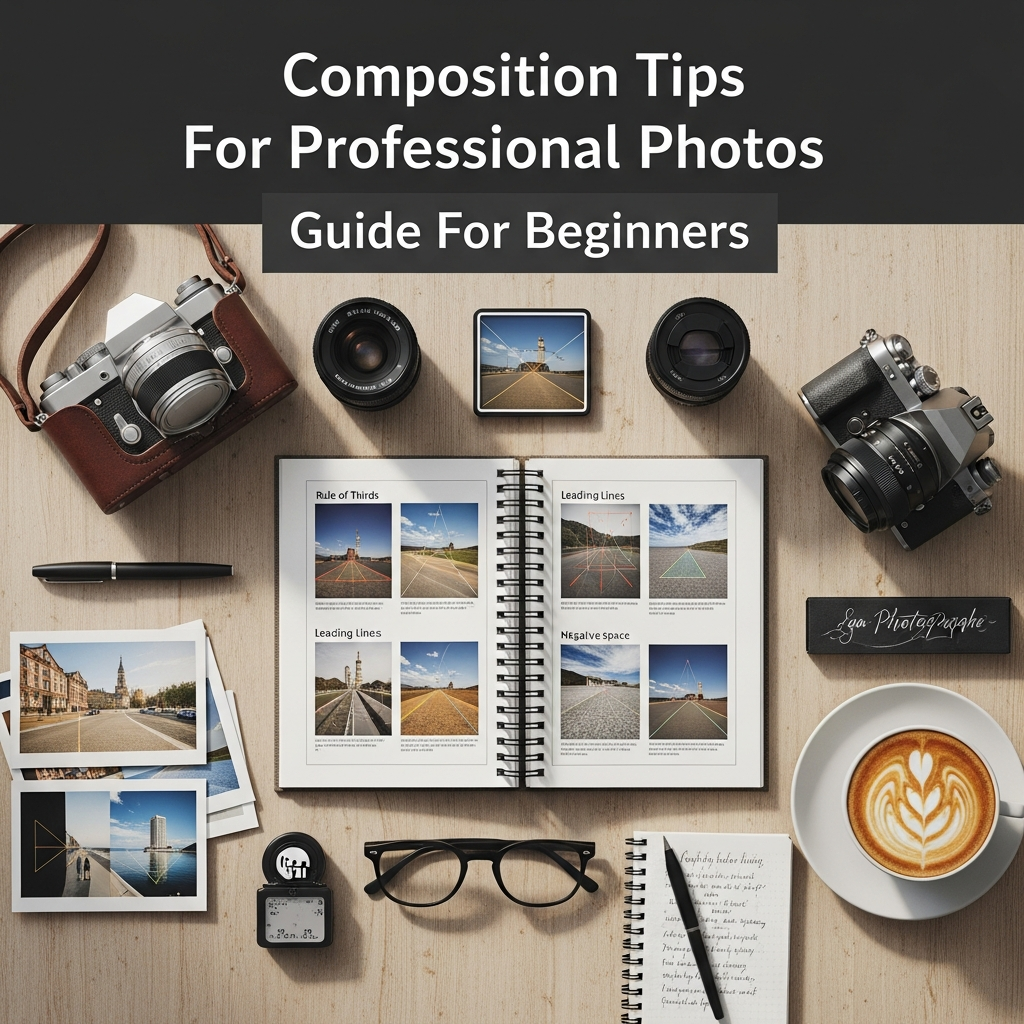
Composition is the art of arranging visual elements within a frame to convey a specific message, emotion, or story. For beginners, mastering this skill is the single most effective way to improve your photography overnight. In this comprehensive composition tips for professional photos guide for beginners, we will explore the fundamental principles and advanced techniques used by professionals to create stunning visual narratives.
What is Composition and Why Does It Matter?
At its core, composition is the “grammar” of photography. Just as a writer organizes words to form a compelling sentence, a photographer organizes subjects, light, and shadows to create a compelling image. Without a solid compositional structure, even the most beautiful subject can look cluttered or boring.
By understanding photography composition techniques, you gain the power to direct the viewer’s eye exactly where you want it to go. You learn how to emphasize your focal point, create a sense of balance, and evoke specific feelings—all through the way you position your camera and frame your shot.
1. The Foundation: Mastering the Rule of Thirds
The Rule of Thirds is perhaps the most well-known principle in photography, and for good reason. It is a reliable starting point for creating balanced and engaging images. To apply this technique, imagine your frame is divided into a 3×3 grid by two horizontal and two vertical lines.
Instead of placing your subject directly in the center of the frame—which can often feel static—you should place the most important elements along these lines or at the points where they intersect (known as power points). This creates more energy and interest in the photo.
- Landscapes: Place the horizon line on the upper or lower third line rather than in the middle.
- Portraits: Align the subject’s eyes with the top horizontal line to create a natural connection with the viewer.
- Action Shots: Give the subject “room to move” by placing them on one side of the grid, looking into the empty space.
2. Guiding the Eye with Leading Lines
One of the most powerful visual storytelling tools at your disposal is the use of leading lines. These are literal or implied lines within an image that draw the viewer’s eye through the scene, usually toward the main subject.
Leading lines can be anything: a winding road, a fence, a shoreline, or even the shadows cast by a building. When used effectively, they create a sense of journey and depth of field, making the photo feel three-dimensional. Diagonal lines, in particular, add a sense of movement and dynamism to an otherwise still image.
3. Achieving Harmony Through Symmetry and Patterns
The human brain is naturally drawn to order and repetition. Symmetry and patterns can be incredibly eye-catching because they provide a sense of stability and aesthetic perfection. Symmetry occurs when two halves of a scene are identical—think of a reflection in a calm lake or a perfectly centered architectural shot.
Patterns, on the other hand, involve repeating shapes, colors, or textures. To take professional-grade photos, you can either emphasize the perfection of a pattern or purposefully “break” it. Introducing an element that interrupts a repetitive pattern creates an immediate focal point that demands attention.
4. Creating Depth: Foreground, Middle Ground, and Background
A common mistake beginners make is taking “flat” photos. Because photography is a two-dimensional medium representing a three-dimensional world, you must work to create a sense of depth. You can achieve this by consciously including elements in the foreground, middle ground, and background.
Adding foreground interest, such as a rock in a landscape or a branch in a street scene, gives the viewer a “stepping stone” into the image. This layering effect makes the viewer feel as though they are standing right there in the scene with you.
5. The Power of Negative Space
Sometimes, what you leave out of a photo is just as important as what you put in. Negative space refers to the empty areas around your subject. While it might seem counterintuitive to have “empty” space, it actually helps to emphasize the subject by removing distractions.
In modern professional photos, negative space is often used to create a sense of minimalism, solitude, or scale. It allows the subject to “breathe” and ensures that the viewer’s focus remains entirely on the intended focal point.
6. Framing Within the Frame
Framing in photography involves using elements within the scene to create a “border” around your subject. This technique is excellent for adding context and drawing the eye inward. Common natural frames include overhanging tree branches, archways, windows, or even the gap between two buildings.
Using a frame helps to isolate the subject from the rest of the environment and adds a layer of complexity to the composition. It often gives the viewer the feeling of “peeking” into a private moment or a hidden world.
7. Understanding Visual Weight and Balance
Every element in your photo has a certain “weight.” Large objects, bright colors, and high-contrast areas carry more visual weight than small, dull, or low-contrast areas. A professional composition involves balancing these weights so the photo doesn’t feel “tilted” to one side.
There are two main types of balance in photography:
- Symmetrical Balance: Both sides of the image have equal weight, creating a formal and calm feeling.
- Asymmetrical Balance: You balance a large subject on one side with a smaller, high-interest object on the other side. This is often more visually interesting and complex.
8. Exploring Camera Angles and Perspectives
Most beginners take photos from eye level. While this is natural, it often results in ordinary images. To create professional photos, you must experiment with different camera angles. Changing your perspective can completely transform the mood of a shot.
- Low Angle (Worm’s Eye View): Shooting from the ground up makes subjects look powerful, heroic, or imposing.
- High Angle (Bird’s Eye View): Shooting from above makes the subject look smaller and provides a clear overview of the environment.
- Dutch Angle: Tilting the camera slightly can create a sense of unease, tension, or excitement.
9. The Golden Ratio and the Fibonacci Spiral
If you find the Rule of Thirds too simplistic, the Golden Ratio (approximately 1.618) offers a more sophisticated way to achieve harmony. Often visualized as the Fibonacci Spiral, this technique is based on a mathematical ratio found throughout nature, from seashells to galaxies.
Using the Golden Ratio helps create a flow that feels incredibly natural to the human eye. It guides the viewer in a curved path towards the main subject, making the composition feel organic and balanced without being overtly “grid-like.”
10. Using Color and Texture as Compositional Tools
Color isn’t just about making things look pretty; it’s a vital part of composition. Complementary colors (opposite each other on the color wheel, like blue and orange) create high contrast and excitement. Analogous colors (next to each other, like green and yellow) create a sense of peace and unity.
Similarly, texture can be used to add a tactile quality to your photos. Harsh, side-lighting can emphasize the texture of a stone wall or the wrinkles on a face, adding “grit” and character to your professional photos.
Step-by-Step Guide: How to Compose a Professional Photo
Now that you understand the theory, here is a practical workflow you can use every time you pick up your camera:
- Identify Your Subject: Ask yourself, “What is the main point of this photo?” This is your focal point.
- Survey the Environment: Look for leading lines, natural frames, or interesting patterns that can enhance the subject.
- Choose Your Grid: Decide if you want to use the Rule of Thirds or perhaps a centered symmetrical approach.
- Adjust Your Level: Don’t just stand still. Move your feet! Try a lower or higher camera angle to see how it changes the story.
- Check the Background: Ensure there are no distracting elements (like a pole growing out of someone’s head). Use negative space to simplify if necessary.
- Manage Depth: Check if you have something in the foreground to add a sense of three-dimensionality.
- Final Framing: Look at the edges of your frame. Make sure you aren’t accidentally cutting off important parts of the subject (like feet or hands).
Common Composition Mistakes Beginners Should Avoid
Even with the best composition tips for professional photos guide for beginners, it is easy to fall into common traps. Here is what to watch out for:
- The “Bulls-eye” Syndrome: Placing everything in the dead center. Unless you are going for perfect symmetry, this usually results in a boring photo.
- Cluttered Backgrounds: A messy background distracts from the subject. Always look past your subject before clicking the shutter.
- Cropping at the Joints: When photographing people, never crop the frame at the neck, elbows, or knees. It creates an unsettling “amputated” look.
- Ignoring the Horizon: A tilted horizon line can ruin a beautiful landscape. Use the built-in level on your camera or phone.
- Over-complicating the Scene: Sometimes, less is more. If there is too much going on, the viewer won’t know where to look.
Conclusion: Practice Makes Perfect
Mastering photography composition techniques is not something that happens overnight. It requires a shift in how you see the world. Start by picking one technique—like leading lines—and spend an entire day practicing only that. Over time, these principles will become second nature, and you will find yourself composing professional-grade images without even thinking about it.
Remember, these are “guides,” not “laws.” Once you understand the rules of composition, you gain the creative freedom to break them purposefully to achieve a specific artistic effect. The most important thing is to keep shooting, keep experimenting, and keep refining your eye.
Frequently Asked Questions (FAQ)
What is the most important rule in photography composition?
While no single rule is “most important,” the Rule of Thirds is widely considered the most essential starting point for beginners. It provides an easy-to-follow framework for creating balanced and visually appealing images.
Can I fix bad composition during editing?
You can improve composition through cropping for impact, but you cannot fully “fix” a fundamentally poor shot. It is always better to get the composition right in-camera to preserve image quality and intentionality.
What is the difference between the Rule of Thirds and the Golden Ratio?
The Rule of Thirds is a simple 3×3 grid, while the Golden Ratio is a more complex mathematical ratio (1.618). The Golden Ratio often feels more natural and less “structured” than the Rule of Thirds, but it is harder to visualize quickly in the field.
How does depth of field affect composition?
Depth of field (how much of the image is in focus) helps isolate the subject. A shallow depth of field creates a blurred background, which simplifies the composition and forces the viewer to look at the sharp focal point.
Does equipment matter for good composition?
No. Composition is entirely about the photographer’s eye and placement. You can apply all the composition tips for professional photos guide for beginners using a high-end DSLR, a mirrorless camera, or even a smartphone.