15 Inspiring Visual Art Project Ideas for Home: A Beginner’s Guide
Transforming your living space does not always require a massive renovation budget or professional interior designers. Often, the most profound changes come from the personal touch of visual art project ideas for home. Engaging in creative endeavors allows you to infuse your personality into your surroundings while reaping the therapeutic benefits of artistic expression.
If you have ever looked at a blank wall and felt a spark of inspiration, but didn’t know where to start, you are in the right place. This guide is designed specifically for beginners who want to explore creative home decor through various beginner art techniques. You do not need a degree in Fine Arts to create something beautiful; you only need curiosity and the right approach.
Why You Should Start a Visual Art Project at Home
Art is more than just decoration. For a beginner, starting a DIY wall art project offers several advantages:
- Stress Reduction: Engaging in creative flow state significantly lowers cortisol levels.
- Personalization: Your home becomes a true reflection of your journey and tastes.
- Cost-Effectiveness: Creating your own pieces is often much cheaper than buying mass-produced gallery art.
- Skill Development: You will learn patience, hand-eye coordination, and spatial awareness.
Setting Up Your Home Art Studio
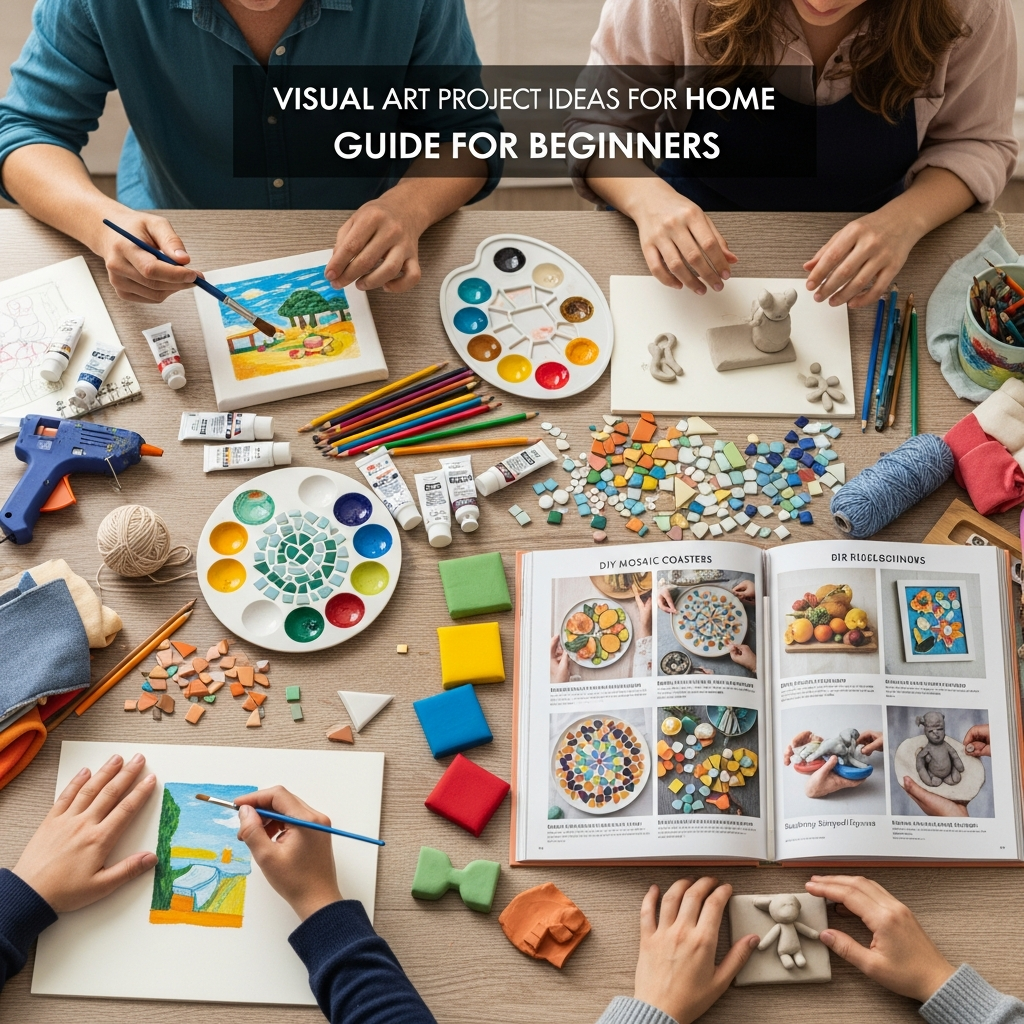
Before diving into specific visual art project ideas for home, you must prepare your environment. You do not need a dedicated room; a corner of a dining table or a foldable desk will suffice.
Essential Supplies for Beginners
- Acrylic Paints: Versatile, fast-drying, and easy to clean with water.
- Brushes: A variety pack containing round, flat, and fan brushes.
- Canvases or Heavy Paper: 300gsm paper is ideal for mixed media.
- Adhesives: Acid-free glue, painter’s tape, and double-sided tape.
- Lighting: Ensure you have natural light or a “daylight” LED bulb to see colors accurately.
15 Creative Visual Art Project Ideas for Beginners
Here is a curated list of projects ranging from minimalist designs to vibrant textures, perfect for any interior design art style.
1. Abstract Canvas Painting with Acrylics
Abstract painting for beginners is the ultimate “no-pressure” project. Instead of trying to replicate a realistic image, focus on color harmony and movement. Use a palette knife to layer thick paint (impasto style) for a modern, professional look.
2. Minimalist Line Art
Line art is incredibly popular in modern creative home decor. Using a fine-liner pen or a small brush with black acrylic, draw a single, continuous line to form a face, a leaf, or an abstract shape. The beauty lies in the simplicity and the “white space” around the drawing.
3. Pressed Flower Framing
This project combines nature with visual art. Collect local wildflowers, press them between heavy books for two weeks, and arrange them in a double-glass floating frame. It creates a timeless, organic aesthetic for any room.
4. Geometric Wall Murals with Painter’s Tape
If you want a large-scale DIY wall art piece, use your wall as a canvas. Use painter’s tape to create geometric patterns (triangles, chevrons, or hexagons). Paint the sections with complementary colors and peel the tape off to reveal crisp, clean lines.
5. Mixed Media Collage
Mixed media art allows you to combine different materials like old magazines, fabric scraps, gold leaf, and charcoal. This is a fantastic way to practice composition without needing advanced drawing skills.
6. Watercolor Landscapes
Watercolors are known for their transparency and ethereal quality. Start by wetting the paper and dropping in soft blues and greens to create a “wet-on-wet” horizon. It is a calming creative hobby at home that produces sophisticated results.
7. Upcycled Bottle Painting
Don’t throw away glass bottles. Clean them and use glass paint or multi-surface acrylics to create a set of decorative vases. Use “dotting” techniques or mandala patterns for a bohemian vibe.
8. Macramé Wall Hangings
While technically a fiber art, macramé is a visual masterpiece. Learning basic knots like the “square knot” or “lark’s head” allows you to create textured, 3D art that adds warmth to minimalist interiors.
9. Stencil Art for Furniture
Give an old side table a new life. Use pre-cut stencils and chalk paint to apply intricate patterns. This sustainable art project reduces waste while upgrading your home’s visual appeal.
10. Textured Plaster Art
Currently a major trend in interior design art, textured plaster involves using joint compound or modeling paste on a canvas. Use a notched trowel to create ridges or waves, then paint it a solid matte color for a high-end sculptural look.
11. Custom Photo Gallery Walls
Art doesn’t have to be painted. Curate your own photography, print them in black and white, and use consistent framing. The “art” lies in the layout and the narrative you create on the wall.
12. Block Printing on Fabric
Carve simple shapes into linoleum blocks or even a potato. Use fabric ink to stamp patterns onto plain cushion covers or tea towels. It is a functional way to display your visual art project ideas for home.
13. Resin Coasters and Trays
Resin art creates a glossy, glass-like finish. Pour clear resin mixed with pigments or dried glitter into molds. The result is functional art that looks like expensive marble or geode stone.
14. Digital Art Prints
If you prefer a screen over a canvas, use free tools like Canva or Procreate. Create typography art with inspiring quotes and print them on high-quality cardstock for a professional budget-friendly art idea.
15. Sculptural Clay Decor
Air-dry clay is beginner-friendly. Shape it into small trinket dishes, incense holders, or abstract figurines. Once dry, sand them smooth and paint them with acrylics and a glossy varnish.
Step-by-Step Guide: Creating Your First Masterpiece
Follow this structured approach to ensure your first project is a success.
Step 1: Define Your Color Palette
Look at the room where the art will hang. Choose 3 main colors and 1 accent color. Using a limited palette makes the piece look more intentional and professional.
Step 2: Sketch the Composition
Before touching the canvas, draw a small “thumbnail” sketch on scrap paper. Decide where the focal point will be. Remember the “Rule of Thirds”—placing the main element slightly off-center is usually more visually pleasing.
Step 3: Layering
Whether you are painting or collaging, work from the background to the foreground. Start with broad washes of color or large shapes, then add fine details and highlights at the very end.
Step 4: The “Walk Away” Test
Art is never truly finished; it is only abandoned. If you feel stuck, walk away for an hour. When you return with “fresh eyes,” you will immediately see what needs to be added or removed.
Expert Tips for Success in Visual Art
To elevate your work from “amateur” to “artistic,” keep these professional tips in mind:
- Don’t Fear Mistakes: In abstract painting for beginners, there are no mistakes, only “happy accidents.” You can always paint over a layer once it dries.
- Invest in Quality White Paint: Cheap white paint is often translucent. A high-quality “Titanium White” will help you mix colors better and cover errors effectively.
- Varnish Your Work: Always apply a protective spray or brush-on varnish. It protects the art from UV light and dust, and it gives the piece a finished, gallery-grade sheen.
- Frame Everything: Even a simple drawing looks like a masterpiece when placed in a clean, well-fitted frame with a mat board.
Common Mistakes to Avoid
- Overworking the Piece: Knowing when to stop is a skill. If the colors start looking “muddy,” stop and let it dry.
- Using the Wrong Paper: Using watercolor on thin printer paper will cause it to warp and tear. Always match your medium to the correct surface.
- Ignoring Lighting: Painting in a dark room will result in colors that look completely different (and often disappointing) in daylight.
Conclusion
Starting your journey with visual art project ideas for home is a rewarding path toward self-discovery and a more beautiful living environment. Whether you choose the tactile nature of textured plaster art or the precision of minimalist line art, the key is to start.
Remember, every expert was once a beginner. Your home is your sanctuary; fill it with the colors, textures, and stories that resonate with you. Grab your brushes, clear a space on your table, and let your creativity transform your home today.
Frequently Asked Questions (FAQ)
Q: Do I need to be good at drawing to start a visual art project?
A: Absolutely not. Many projects, such as abstract painting, fluid art, or geometric wall murals, rely on color and shape rather than technical drawing skills.
Q: What is the cheapest art project for a beginner?
A: Pressed flower framing and line art are very budget-friendly. You likely already have the “supplies” (books and pens) at home.
Q: How do I choose the right size for wall art?
A: A good rule of thumb is that the art should take up about 60% to 75% of the available wall space that isn’t covered by furniture or molding.
Q: How long does a typical DIY art project take?
A: Most beginner projects can be completed in 2 to 4 hours, excluding drying time. It is a perfect weekend activity.
Q: Can I sell the art I make at home?
A: Yes! Many successful artists started by creating pieces for their own homes, sharing them on social media, and eventually opening online shops.