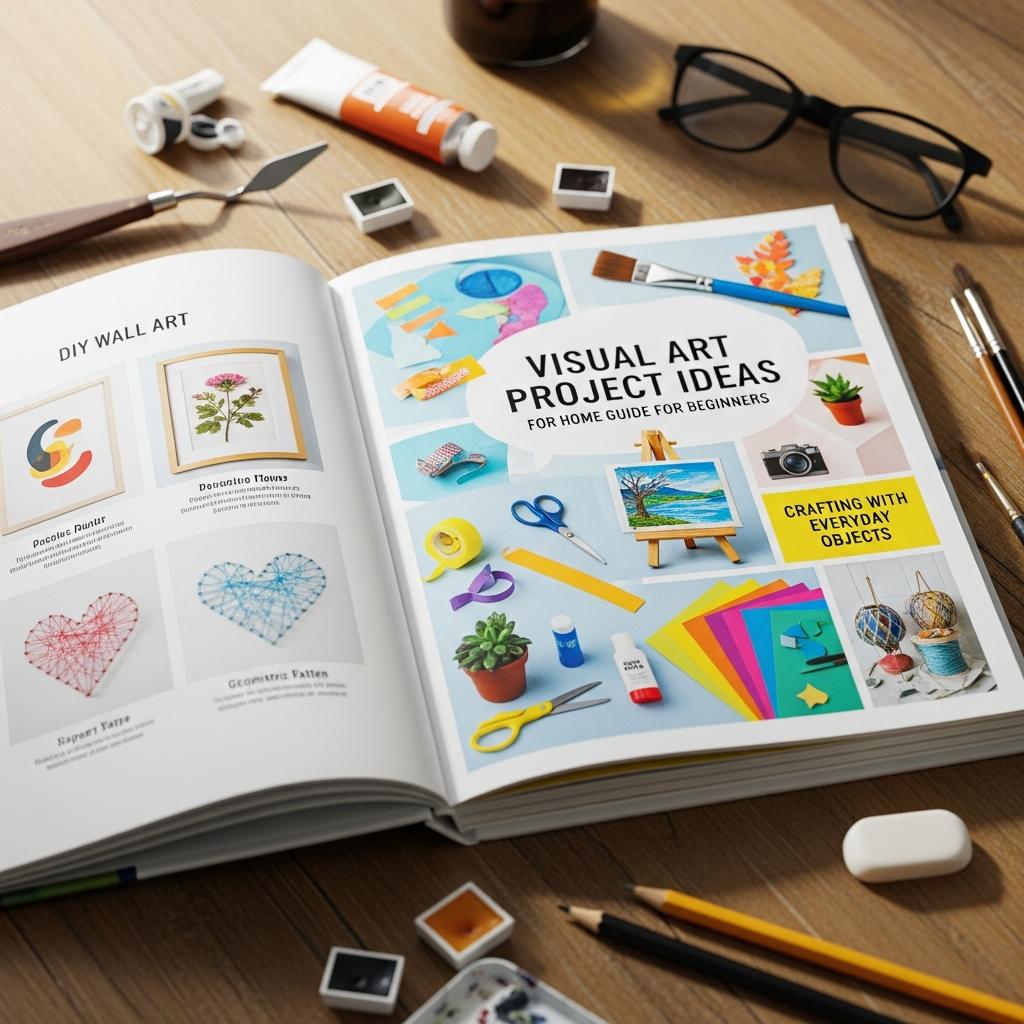
Visual Art Project Ideas For Home: The Ultimate Beginner’s Guide to Creative Decor
Transforming your living space into a personal sanctuary often requires more than just high-end furniture or trendy paint colors. It requires a soul—a reflection of your personality and creativity. Engaging in visual art project ideas for home is one of the most rewarding ways to achieve this. You do not need a degree in Fine Arts to create something beautiful; you only need curiosity and the right guidance.
This guide is meticulously designed for beginners who wish to explore the world of DIY wall decor, abstract painting, and mixed media. Whether you are looking to fill a blank wall or find a therapeutic weekend hobby, these projects will provide the foundation you need to start your artistic journey today.
Why Starting a Visual Art Project is Beneficial for Your Home
Before diving into the “how-to,” it is essential to understand the “why.” Integrating handmade art into your interior aesthetics offers several advantages:
- Personalization: Your home becomes a unique reflection of your taste, rather than a catalog replica.
- Cost-Effectiveness: High-quality gallery art can be expensive. Creating your own budget-friendly art allows for premium looks at a fraction of the cost.
- Mental Wellness: Engaging in creative activities reduces stress and improves focus, providing a much-needed digital detox.
- Conversation Starters: There is a unique pride in telling guests, “I made that myself.”
Essential Art Supplies for Your Home Studio
To ensure your visual art project ideas for home look professional, you must start with the right tools. You do not need to buy the most expensive brands, but quality matters in specific areas.
1. Support Surfaces
Most beginners start with stretched canvases, but do not overlook heavy-weight watercolor paper, wooden panels, or even repurposed cardboard for practice.
2. Mediums and Pigments
- Acrylic Paints: Ideal for beginners due to their fast drying time and versatility.
- Watercolors: Perfect for those who prefer a soft, ethereal look.
- Alcohol Inks: Great for creating fluid, modern abstract pieces.
3. Applicators
Invest in a variety pack of synthetic brushes (round, flat, and fan shapes). Additionally, palette knives are excellent for creating textured plaster art or thick impasto effects.
4. Miscellaneous Essentials
Keep painter’s tape, a palette (or paper plate), water jars, and old rags nearby. These simple items are the backbone of a successful home art project.
10 Inspiring Visual Art Project Ideas for Beginners
Here are ten curated projects ranging from minimalist designs to vibrant mixed-media pieces.
1. Minimalist Line Art Portraits
Line art is incredibly popular in modern interior design. It focuses on using a single, continuous line to represent a figure or object.
- How to do it: Use a fine-liner pen or a small round brush with black acrylic. Trace a simple silhouette onto a white canvas. The beauty lies in the simplicity and the “imperfections.”
2. Abstract Color Block Painting
This project is perfect for matching your art to your existing room colors.
- How to do it: Use painter’s tape to divide your canvas into geometric sections. Paint each section with a different color from your chosen palette. Remove the tape while the paint is slightly damp for crisp lines.
3. Botanical Watercolor Illustrations
Nature-inspired art brings a sense of calm to any room.
- How to do it: Find a leaf or flower from your garden. Lightly sketch its outline with a pencil. Use diluted watercolors to layer shades of green and brown, allowing the colors to bleed naturally for an organic feel.
4. Textured Plaster Art
If you love the “wabi-sabi” or minimalist aesthetic, textured art is a must-try.
- How to do it: Mix joint compound (plaster) with a bit of white paint. Apply it to a canvas using a notched trowel or a comb to create ridges and waves. Once dry, leave it white or add a light wash of beige.
5. The “Found Object” Assemblage
Visual art isn’t limited to paint. Assemblage involves creating a 3D collage from everyday items.
- How to do it: Collect items like old keys, sea glass, or interesting pieces of wood. Arrange them on a sturdy board and secure them with heavy-duty adhesive. Spray paint the entire piece in a matte black or metallic gold for a high-end sculptural look.
6. Geometric Tape Art
This is the ultimate beginner painting technique for those who fear they “can’t draw a straight line.”
- How to do it: Criss-cross painter’s tape across a canvas in random directions. Fill the resulting triangles with various shades of a single color (monochromatic) or contrasting colors.
7. Pressed Flower Frames
Preserve the beauty of nature while creating delicate DIY wall decor.
- How to do it: Press colorful flowers between heavy books for two weeks. Once flattened and dried, arrange them between two panes of glass in a floating frame.
8. Alcohol Ink Coasters
Small-scale projects are less intimidating and highly functional.
- How to do it: Drip alcohol inks onto ceramic tiles. Use a straw to blow the ink around, creating marble-like patterns. Seal them with a heat-resistant resin or clear spray.
9. Mixed Media Collage
Mixed media for beginners is about breaking rules.
- How to do it: Combine old book pages, fabric scraps, and acrylic paint on a single surface. Layering is key here. Start with the paper elements and finish with paint highlights.
10. Stenciled Typography Art
Words can be art too. Choose a quote that resonates with your family.
- How to do it: Use a stencil kit or print letters to cut out. Sponge paint over the stencil onto a wooden plaque or canvas. This adds a personal and literary touch to your home.
Step-by-Step Guide: How to Execute Your First Project
Follow this structured approach to ensure your first foray into visual art project ideas for home is a success.
Step 1: Define Your Space and Color Palette
Look at the wall where you intend to hang the art. Note the lighting and the dominant colors in the room. Use a color wheel to find complementary or analogous colors that will enhance the space.
Step 2: Gather Your Tools
Prepare your “studio” area. Cover your table with plastic or old newspapers. Having everything within reach prevents messy interruptions once you start the creative flow.
Step 3: Sketch the Composition
Never start on a blank canvas without a plan. Lightly mark your main shapes or focal points with a pencil. This acts as a roadmap for your paint or materials.
Step 4: Layering and Execution
Work from the background to the foreground. If you are painting, apply thin layers first and build up to thicker, more detailed strokes. Allow drying time between layers to prevent muddy colors.
Step 5: Finishing Touches and Protection
Once your masterpiece is dry, apply a varnish (gloss, satin, or matte). This protects the art from dust, UV rays, and moisture, ensuring it lasts for years.
Expert Tips for Professional-Looking Results
You don’t need to be a pro to make your art look like it came from a gallery. Follow these insider tips:
- The Rule of Thirds: Avoid placing your main subject dead-center. Divide your canvas into a 3×3 grid and place focal points along the lines or intersections for a more dynamic composition.
- Limit Your Palette: Beginners often use too many colors. Stick to 3-5 colors to maintain a cohesive and sophisticated look.
- Invest in Framing: A simple wooden frame can make a basic abstract art project look like a thousand-dollar piece. Framing provides a “finished” boundary for the eyes.
- Embrace Mistakes: In visual arts, “mistakes” are often where the most interesting textures and patterns happen. Don’t be afraid to pivot your design if something doesn’t go as planned.
Curating Your Home Gallery Wall
Once you have completed several visual art project ideas for home, you might want to display them together. A gallery wall is an excellent way to showcase your journey.
- Mix Sizes: Combine large canvases with smaller framed sketches.
- Maintain a Theme: You can tie different styles together by using the same frame color or a consistent color story across the pieces.
- Layout First: Lay your art on the floor in front of the wall to test the arrangement before driving any nails into the wall.
Frequently Asked Questions (FAQ)
What is the easiest art project for a complete beginner?
The Geometric Tape Painting is widely considered the easiest. It requires no drawing skills and relies on the tape to create clean, professional lines.
How can I make my DIY art look expensive?
Focus on texture and framing. Textured plaster art or using a high-quality floating frame can instantly elevate a simple project to a gallery-standard piece.
Do I need an easel to start?
No. Many beginners prefer working on a flat table. An easel is helpful for larger canvases or to see your work from a distance, but it is not a requirement for most home art projects.
What is the best paint for beginners?
Acrylic paint is the best choice. It is water-based, easy to clean up, dries quickly, and can be used on almost any surface, including canvas, wood, and paper.
Conclusion
Taking the first step into the world of visual art project ideas for home can feel daunting, but it is a journey of self-discovery. By starting with simple techniques like line art or color blocking, you build the confidence to tackle more complex mixed media or textured art pieces.
Remember, the goal is not perfection—it is expression. Your home is your canvas, and every stroke you make adds a layer of warmth and personality that store-bought decor simply cannot provide. Grab your brushes, select a project from this guide, and start creating your own masterpiece today.
Your journey into artistic expression starts with a single mark. What will you create first?