Visual Art Project Ideas for Home: The Ultimate Guide for Beginners
Have you ever looked at a blank wall in your house and felt it was missing a soul? Art is the heartbeat of a home, but purchasing original pieces can often be prohibitively expensive. This is where the power of DIY creativity comes into play. Engaging in visual art project ideas for home is not just about saving money; it is about self-expression, mental relaxation, and creating a space that truly reflects your personality.
In this comprehensive guide, we will walk you through everything you need to know to start your artistic journey. From setting up your first home studio to completing sophisticated-looking projects, this guide is designed specifically for the beginner who believes they “don’t have an artistic bone in their body.”
Why You Should Start Creating Art at Home
Before we dive into the specific beginner art techniques, it is important to understand the benefits of creating visual art. For many, the hurdle is not a lack of interest, but a lack of confidence.
1. Stress Reduction and Mindfulness
Creating art acts as a form of “flow,” a state where you are so immersed in an activity that time seems to disappear. This has been scientifically proven to lower cortisol levels and improve overall mental well-being.
2. Personalized Interior Design
Generic store-bought prints lack the story and texture of something handmade. When you create DIY wall decor, you control the color palette to match your furniture perfectly.
3. Skill Development
Visual art is a muscle. The more you practice these home art projects, the more your hand-eye coordination and spatial awareness will improve.
Essential Art Supplies for Home Projects: Building Your Starter Kit
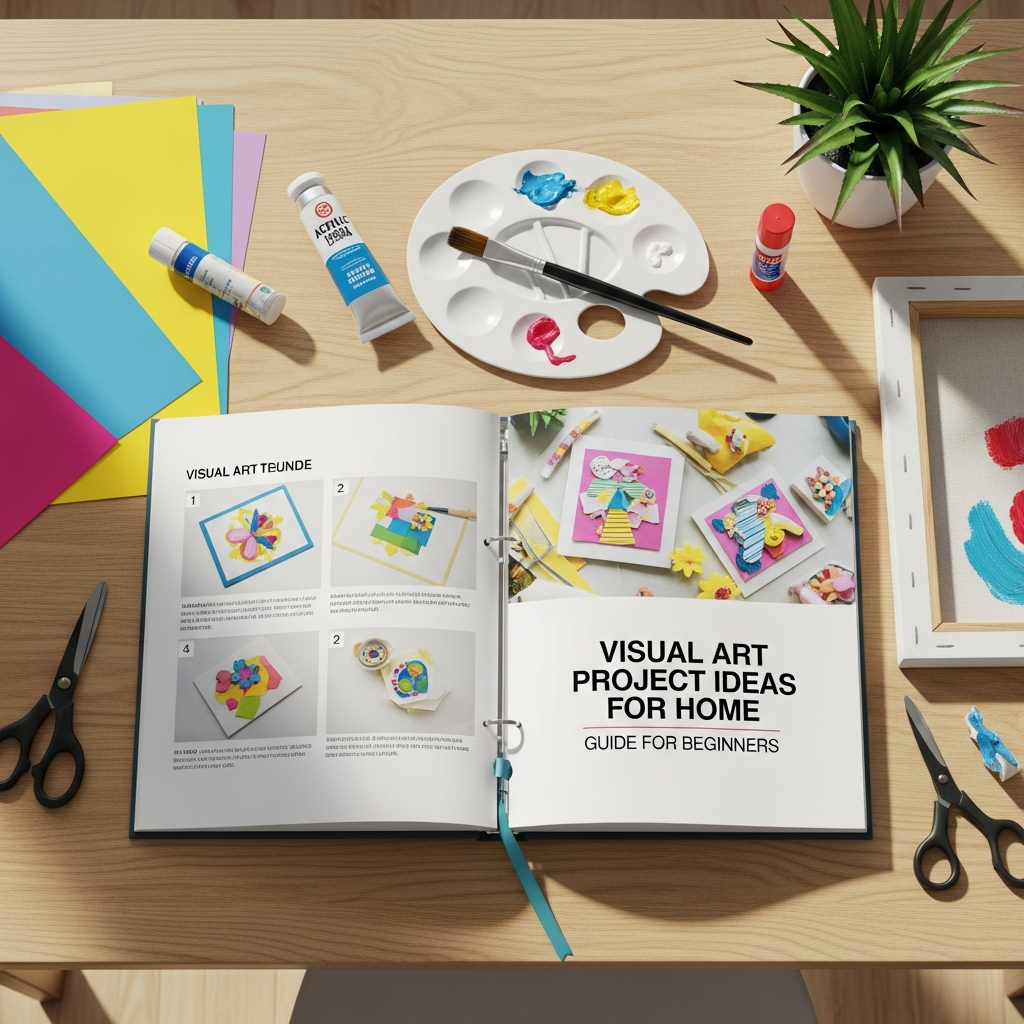
One of the biggest mistakes beginners make is buying too many expensive supplies at once. To succeed with visual art project ideas for home, you only need a few high-quality basics.
The Basic Toolkit
- Acrylic Paints: These are the best for beginners because they are water-soluble, dry quickly, and are very forgiving.
- Brushes: Invest in a small set containing a flat brush (for large areas), a round brush (for details), and a fan brush (for textures).
- Canvases and Paper: Start with canvas panels or heavy-weight (300gsm) watercolor paper.
- Palette and Knives: A simple plastic palette and one metal palette knife for mixing.
- Masking Tape: Essential for creating clean, crisp lines in modern art.
Creating Your Home Studio Setup
You do not need a dedicated room to be an artist. A small corner with good natural light is sufficient. Ensure you have a sturdy table, a comfortable chair, and a drop cloth to protect your flooring from accidental spills.
Project 1: The Modern Abstract Canvas (Step-by-Step)
Abstract art is one of the most accessible visual art project ideas for home because it focuses on emotion and color rather than realistic representation.
Step 1: Choose Your Color Palette
Select 3-4 colors that complement your room. Pro tip: Use a color wheel to find “analogous” colors (colors next to each other) for a harmonious look, or “complementary” colors (opposite each other) for high contrast.
Step 2: Prime Your Canvas
Even if the canvas is pre-primed, applying a thin layer of white acrylic paint (or gesso) helps the subsequent layers glide more smoothly.
Step 3: The Layering Process
Start with your lightest color. Use large, sweeping motions. Don’t worry about the outcome yet. Once the first layer is dry, add darker tones. Use your palette knife to scrape paint across the surface to create “impasto” textures.
Step 4: Adding “The Pop”
Once your main composition is done, use a contrasting metallic paint (like gold or copper) to add small highlights. This gives the piece a professional, high-end gallery feel.
Project 2: Minimalist Line Art for Elegant Decor
If your home has a Scandinavian or minimalist aesthetic, minimalist line art is the perfect project. This technique relies on the “less is more” philosophy.
Materials Needed:
- Fine-liner pens or a very thin round brush.
- Black India ink or black acrylic paint.
- Smooth Bristol paper.
The Technique:
- Sketch Lightly: Use a 2H pencil to lightly trace a continuous line drawing. Popular subjects include botanical leaves or a single-line profile of a face.
- Commit to the Line: Trace over your pencil mark with the ink. The key here is confidence. Do not worry if the line is slightly shaky; that adds to the “hand-drawn” charm.
- The Frame is Key: Minimalist art looks best when paired with a large mat board and a thin black or wood-toned frame.
Project 3: Botanical Watercolor Illustrations
Watercolor is often seen as intimidating, but for beginner art techniques, it offers a beautiful, airy quality that is hard to replicate with other media.
Understanding Water Control
The secret to watercolor is the ratio of water to pigment.
- Wet-on-Wet: Wet the paper first, then drop in color. This creates soft, blurry edges.
- Wet-on-Dry: Apply wet paint to dry paper for sharp, defined shapes.
A Simple Project: Eucalyptus Leaves
- Mix a muted green using blue, yellow, and a tiny drop of red.
- Paint a thin vertical line for the stem.
- Press the belly of your brush down onto the paper to create an oval leaf shape, then lift as you pull away.
- Repeat this along the stem, varying the size of the leaves.
Project 4: Textured Mixed Media Art
Mixed media art for beginners is incredibly fun because there are no rules. You can combine paint, fabric, old book pages, and even sand.
The “Joint Compound” Trend
A very popular visual art project idea for home involves using hardware store joint compound to create 3D textures on canvas.
- Apply a thick layer of joint compound to a canvas.
- Use a notched trowel or even a hair comb to create ridges, waves, or geometric patterns.
- Let it dry for 24 hours.
- Paint over it with a solid matte color for a sophisticated, sculptural look.
Project 5: Geometric Tape Painting
This is the most “foolproof” method for creating DIY wall decor that looks like it was bought from a designer boutique.
- Tape it off: Use painter’s tape to create geometric shapes (triangles, chevrons, or random polygons) on your canvas.
- Seal the edges: Paint over the edges of the tape with your base color (usually white). This prevents the other colors from bleeding under the tape.
- Color in: Fill each “window” created by the tape with different colors.
- The Reveal: Wait for the paint to be almost dry, then peel the tape back at a 45-degree angle to reveal perfectly sharp lines.
Expert Tips for Composition and Color Theory
To move from “hobbyist” to “artist,” you should keep these professional principles in mind during your home art projects.
The Rule of Thirds
Avoid placing your main subject exactly in the center. Imagine your canvas is divided into a 3×3 grid. Place the most interesting parts of your art along those lines or at their intersections. This creates more visual tension and interest.
Understanding Value
“Value” refers to how light or dark a color is. A common mistake beginners make is using colors that are all the same value. To make your art “pop,” ensure you have a range from very dark (shadows) to very light (highlights).
Choosing the Right Frame
A frame can make or break your artwork.
- Modern Art: Use “floater frames” where the canvas appears to hover inside the wood.
- Works on Paper: Always use a mat (the white border) to give the art room to “breathe.”
How to Maintain and Protect Your Home Art
Once you have completed your visual art project ideas for home, you want them to last.
- Varnishing: Always apply a varnish to your acrylic paintings. This protects them from UV rays, dust, and yellowing. You can choose between matte, satin, or glossy finishes.
- Avoid Direct Sunlight: Even with varnish, hanging art in direct, harsh sunlight for 8 hours a day will eventually cause the colors to fade.
- Cleaning: Use a soft, dry microfiber cloth to gently dust your pieces. Never use water or cleaning chemicals on a painted surface.
Conclusion: Your Artistic Journey Starts Today
Starting with visual art project ideas for home is a journey of discovery. You will make mistakes, and that is perfectly okay. In fact, some of the best art comes from “happy accidents.” The goal is not perfection; the goal is the process of creation.
By following this step-by-step art guide, you now have the foundational knowledge to turn a blank canvas into a masterpiece. Whether you choose the bold strokes of abstract painting or the delicate lines of botanical illustration, your home will be richer for it.
Grab your brushes, clear off a table, and let your creativity flow. Your walls are waiting.
Frequently Asked Questions (FAQ)
Q: Do I need to be good at drawing to start visual art?
A: Absolutely not. Many modern art styles, such as abstract painting or geometric tape art, do not require traditional drawing skills. They focus more on color, composition, and texture.
Q: What is the cheapest way to start making art at home?
A: Start with paper and a basic set of acrylic paints. You can also repurpose old frames from thrift stores and paint over old canvases (just apply a layer of gesso first).
Q: How long does it take for an acrylic painting to dry?
A: Acrylics are “touch dry” within 20-30 minutes. However, thick layers (impasto) can take several hours or even a full day to cure completely.
Q: Can I use house paint for my art projects?
A: While you can, house paint is not designed for longevity on canvas. It may crack or peel over time. It is better to use student-grade acrylic paints which are affordable and archival.
Q: How do I choose the right size for my wall?
A: A common rule of thumb is that art should take up about 60% to 75% of the available wall space that isn’t covered by furniture or molding. When in doubt, go larger; small art often looks “lost” on a big wall.