The world outside is a truly boundless studio, presenting an endless canvas of light, texture, and drama for any photographer. Mastering Outdoor Photography Concepts is not merely about pointing a camera at a beautiful scene; it is about understanding how to harness the dynamic interplay of natural elements to evoke emotion and tell a compelling story. These core Outdoor Photography Concepts span everything from controlling available light to choosing the right subject matter and composition, ultimately defining the visual impact of your final image.

The variety of approaches in this field is vast, ranging from detailed close-ups to expansive vistas. Here is a breakdown of the key areas and popular trends that are shaping current Outdoor Photography Concepts and techniques:
- Environmental Portraiture: Capturing a person within their natural or outdoor setting to tell a story about their connection to the location.
- Documentary-Style Storytelling: Using a sequence of images to document a natural event, a journey, or a conservation message.
- The Power of Weather: Intentionally seeking out dramatic weather conditions—fog, snow, or storm clouds—to add mood and atmosphere, which is a key trend in 2024 photography.
- Aesthetic-Retro Looks: Applying new filters and effects to create a nostalgic or film-like quality, reviving an appreciation for authenticity in outdoor images.
- Minimalist Landscape: Focusing on clean lines, negative space, and simple compositions to highlight the elegance of nature’s design.
Grasping these fundamental Outdoor Photography Concepts will transform your snapshots into powerful, memorable visual narratives, giving you the control you need to create truly evocative and professional-grade work.
Understanding Light: The Absolute Cornerstone of Outdoor Photography Concepts
Light is arguably the most critical element in any form of photography, and its role in outdoor settings is paramount. Unlike a studio environment where you dictate the placement and intensity of every light source, in outdoor photography, you are a responder and manipulator of natural light. A deep understanding of how the sun’s position, the time of day, and the weather affect light quality is a foundational pillar of successful Outdoor Photography Concepts. This isn’t just a technical matter; it’s a creative choice that dictates the mood, texture, and color palette of your entire image.
The Magic of Golden Hour and Blue Hour
The concept of “Golden Hour” and “Blue Hour” is famous, but truly mastering the subtleties of these times is where the professional separates themselves. Golden Hour, which occurs shortly after sunrise and before sunset, offers a warm, soft, and diffuse light that enhances textures and adds a rich, inviting glow to scenes. This light is perfect for almost all Outdoor Photography Concepts, especially for landscape and environmental portraiture, because the low angle of the sun creates long, dramatic shadows that sculpt the land and your subjects. For instance, in landscape work, the Golden Hour light on a rugged mountain range will intensify the red and orange hues of the rock, lending a sense of epic scale and warmth to the photograph.
Conversely, Blue Hour, the period just before sunrise and immediately after sunset, provides a cool, ambient light. The world is bathed in deep shades of blue and indigo. Although technically dim, this light is incredibly even and possesses a unique saturated quality. When incorporating urban elements into your Outdoor Photography Concepts—such as a city park or a bridge—the soft blue sky contrasts beautifully with the warm yellow glow of artificial street lights, creating a highly cinematic effect. The challenge here lies in managing slower shutter speeds and potential camera shake, requiring the photographer to often rely on a tripod to capture the serene, cool atmosphere that is characteristic of this time of day.
Diffused Light and Harsh Midday Challenges
Midday light, often the enemy of outdoor photographers, is intense, high-contrast, and creates harsh, dark shadows that obscure detail. Most photographers avoid this period, but some Outdoor Photography Concepts actually thrive on the strong contrast. For example, to emphasize graphic shapes or stark architectural lines against a cloudless sky, the high sun can be an asset. However, for most other genres, particularly portraiture, direct overhead sun is unflattering. This is why many experienced Outdoor Photography Concepts rely on the use of diffusers, reflectors, or simply seeking shade to mitigate the harshness.
On the other hand, a completely overcast day provides the ultimate natural softbox, resulting in what’s known as “diffused light.” This light quality is highly even, reduces contrast, and saturates colors, making it ideal for macro photography, close-up nature details, and deep forest scenes. The lack of directional shadows allows the subtle details and colors of foliage, flowers, or streams to stand out. Therefore, understanding that diffused light can be just as creatively valuable as direct light allows a photographer to execute diverse Outdoor Photography Concepts regardless of the weather.
Compositional Mastery: The Foundation of Compelling Outdoor Photography Concepts
Composition is the visual architecture of your photograph—how you arrange the elements within the frame. A strong composition guides the viewer’s eye, creates visual balance, and establishes a clear focal point. Without solid compositional skills, even the most spectacular scene can result in a flat, unengaging image. Mastering key compositional rules and knowing when to break them is central to truly powerful Outdoor Photography Concepts. This is where technical knowledge meets creative intuition, forming a bridge between what you see and what you capture.
The Rule of Thirds and Leading Lines
The Rule of Thirds is arguably the most well-known compositional guideline and one of the simplest yet most effective Outdoor Photography Concepts. It suggests dividing the image into nine equal parts using two horizontal and two vertical lines. Placing key elements—like a horizon line, a subject’s eyes, or an important tree—along these lines or at their intersections makes the composition more dynamic and engaging than simply centering the subject. For instance, when photographing a landscape, you might place the horizon on the upper or lower third line, depending on whether the sky or the foreground is the more interesting element.
Leading Lines are another crucial technique within Outdoor Photography Concepts. These are natural or man-made lines that begin in the foreground and guide the viewer’s eye toward the main subject or deeper into the scene. Lines can take many forms: a winding path, a river, a fence, a pattern of shadows, or even the edge of a mountain ridge. The use of leading lines, like a road disappearing into the distance, can dramatically enhance the sense of depth and perspective in your image. This technique is especially powerful in capturing expansive Outdoor Photography Concepts such as rural scenes or desert vistas, pulling the viewer into the narrative of the image.
Negative Space and Foreground Interest
The strategic use of Negative Space is a sophisticated element in advanced Outdoor Photography Concepts. Negative space is the area surrounding the main subject, and it is just as important as the subject itself. Instead of seeing it as “empty” space, think of it as a tool to give the main subject room to breathe and draw attention to its shape and form. A minimalist approach, which is currently a popular trend, often utilizes vast amounts of sky, calm water, or a single-toned field as negative space to emphasize a lone figure, a unique rock formation, or a single tree.
Furthermore, introducing Foreground Interest is a powerful way to add depth and context to landscape and nature-focused Outdoor Photography Concepts. Because the camera naturally flattens a three-dimensional scene, placing an object close to the lens—such as a colorful flower, a texture of rocks, or a piece of driftwood—helps to anchor the image and create a sense of scale. The viewer’s eye starts at this foreground element and then travels through the middle ground to the background, making the scene feel immersive and dimensional. Mastering the balance between the foreground subject, the middle ground, and the background is what elevates a simple scenic picture into a truly captivating example of thoughtful Outdoor Photography Concepts.
Embracing Weather and Atmosphere: Dynamic Outdoor Photography Concepts
The weather is often viewed as a challenge, but the most striking and unique Outdoor Photography Concepts often result from conditions that are less than ideal. Rather than waiting for a perfect sunny day, an experienced photographer learns to embrace the dramatic potential of storms, fog, snow, and rain. These atmospheric conditions introduce mood, color shifts, and an ephemeral quality that cannot be replicated under clear skies. The weather transforms a familiar location into something entirely new, pushing the boundaries of traditional Outdoor Photography Concepts.
The Mystique of Fog and Mist
Fog and mist are among nature’s most effective tools for creating atmospheric and painterly effects. They simplify complex scenes by obscuring distant details, which allows the photographer to focus on a few key elements. Fog naturally softens light, reduces contrast, and creates a sense of depth through ‘atmospheric perspective,’ where objects appear lighter and less saturated as they recede into the distance. This effect is extremely popular in environmental and landscape Outdoor Photography Concepts because it lends an element of mystery, isolation, and quiet drama to the image.
For example, photographing a cluster of trees in a morning mist can result in an image where only the closest trees are sharply defined, with the others fading into a ghostly, gray-white background. To successfully capture this mood, you must meter carefully, often slightly overexposing the scene to ensure the fog appears white and luminous rather than muddy gray. Utilizing these misty conditions is a signature move in many celebrated Outdoor Photography Concepts, making the ordinary look extraordinary.
Snow, Rain, and Dramatic Skies
Snow and rain introduce texture, reflectivity, and unique light challenges that must be addressed to execute specialized Outdoor Photography Concepts. A fresh layer of snow acts as a massive white reflector, bouncing soft, cool light everywhere, but it also fools the camera’s light meter, often leading to underexposed, gray snow. To capture the brilliant white quality of a snowy scene, one must typically overexpose by one or two stops. Conversely, a rainy day gives the world a high-gloss finish; wet pavement and surfaces become deeply reflective, intensifying colors and mirroring lights. Capturing the drama of storm clouds is another critical aspect of powerful Outdoor Photography Concepts. These skies often provide the most texture and visual weight, and using a polarizing filter can help deepen the blue and intensify the white of the clouds, adding immense visual power to the final image. The trend toward capturing the power of weather and unique light is noted as a key idea for 2024, emphasizing how important dramatic conditions are.
Specialized Outdoor Photography Concepts and Genres
The field of outdoor photography is not a monolith; it encompasses several distinct genres, each with its own set of technical demands, creative considerations, and conceptual goals. To truly master the subject, one must delve into these specialized Outdoor Photography Concepts, learning the specific techniques that apply to different subjects, from tiny insects to the vast night sky. This specialization allows for a deeper exploration of natural themes and unique visual storytelling.
Landscape Photography: Scale and Grandeur
Landscape photography is perhaps the most traditional of all Outdoor Photography Concepts, focused on capturing the majesty and scale of the natural world. Modern landscape photography has moved beyond simple postcard shots to emphasize conservation, emotional connection, and powerful composition. This genre demands a meticulous approach to gear, often requiring wide-angle lenses to capture expansive scenes and a tripod to ensure sharpness at smaller apertures and longer exposures. The objective is to convey the immersive experience of being in a particular place.
One of the most complex yet rewarding Outdoor Photography Concepts in landscape work is the use of focus stacking or hyperfocal distance. Because you need everything from the foreground rocks to the distant mountains to be razor-sharp, a large depth of field is essential. By employing advanced focusing techniques and considering the light at both Golden Hour and Blue Hour, a landscape photographer can create images that are both technically flawless and emotionally resonant. The evolution of this field over the last decade has seen a radical change, with new post-production techniques allowing for greater creative freedom and precision in rendering these grand Outdoor Photography Concepts.
Wildlife and Nature Photography: Patience and Precision
Wildlife photography is defined by patience, an intimate knowledge of animal behavior, and the ability to react instantly. Unlike landscape work, the subject is constantly moving, making long telephoto lenses and fast shutter speeds essential. The core conceptual goal is to capture a moment that reveals the essence of the animal’s life—its movement, interaction, or environment. A major trend in current nature photography, and a critical component of evolving Outdoor Photography Concepts, is focusing on environmental context.
Instead of just a tight shot of the animal, many photographers are now aiming for “environmental photography,” which frames the creature within its habitat, adding context and often subtly highlighting issues of conservation. This requires balancing a wide depth of field with the need for a fast shutter speed, a difficult technical compromise. Furthermore, successful wildlife Outdoor Photography Concepts often utilize techniques like ‘panning’ to blur the background while keeping the moving subject relatively sharp, conveying a dynamic sense of motion and speed. Ethical consideration, ensuring the animal is not disturbed or harmed, is also a non-negotiable part of these Outdoor Photography Concepts.
Astrophotography: Capturing the Cosmos
Astrophotography is a highly technical and rapidly growing area of Outdoor Photography Concepts, dedicated to capturing celestial objects and the night sky. This genre presents unique challenges because of the extremely low light conditions and the Earth’s rotation, which causes stars to trail during long exposures. Successful astrophotography requires specialized gear, including fast lenses (low f-numbers) and dedicated tracking mounts to counteract the rotation of the Earth.
Key sub-genres within astrophotography are becoming increasingly popular. The wide field ‘Milky Way’ shot, which captures the central band of our galaxy over a striking landscape, requires shooting during a New Moon to minimize light pollution. Another example of innovative Outdoor Photography Concepts is ‘star trails,’ which uses extremely long exposures or stacks of multiple images to show the apparent movement of the stars around the celestial pole. Mastering the relationship between aperture, ISO, and shutter speed using the ‘500 rule’ (or ‘NPR rule’ for modern cameras) is fundamental to executing these highly technical Outdoor Photography Concepts effectively and naturally.
Portraiture and Fashion: Integrating People into Outdoor Photography Concepts
Integrating human subjects into an outdoor environment merges the precision of studio portraiture with the spontaneity and complexity of natural light. This genre, often called Environmental Portraiture or Outdoor Fashion Photography, is hugely popular, particularly on social media platforms, because of its relatable and vibrant aesthetic. The central challenge of these Outdoor Photography Concepts is harmonizing the subject, the natural setting, and the available light to create a cohesive narrative.
Environmental Portraiture: Setting the Scene
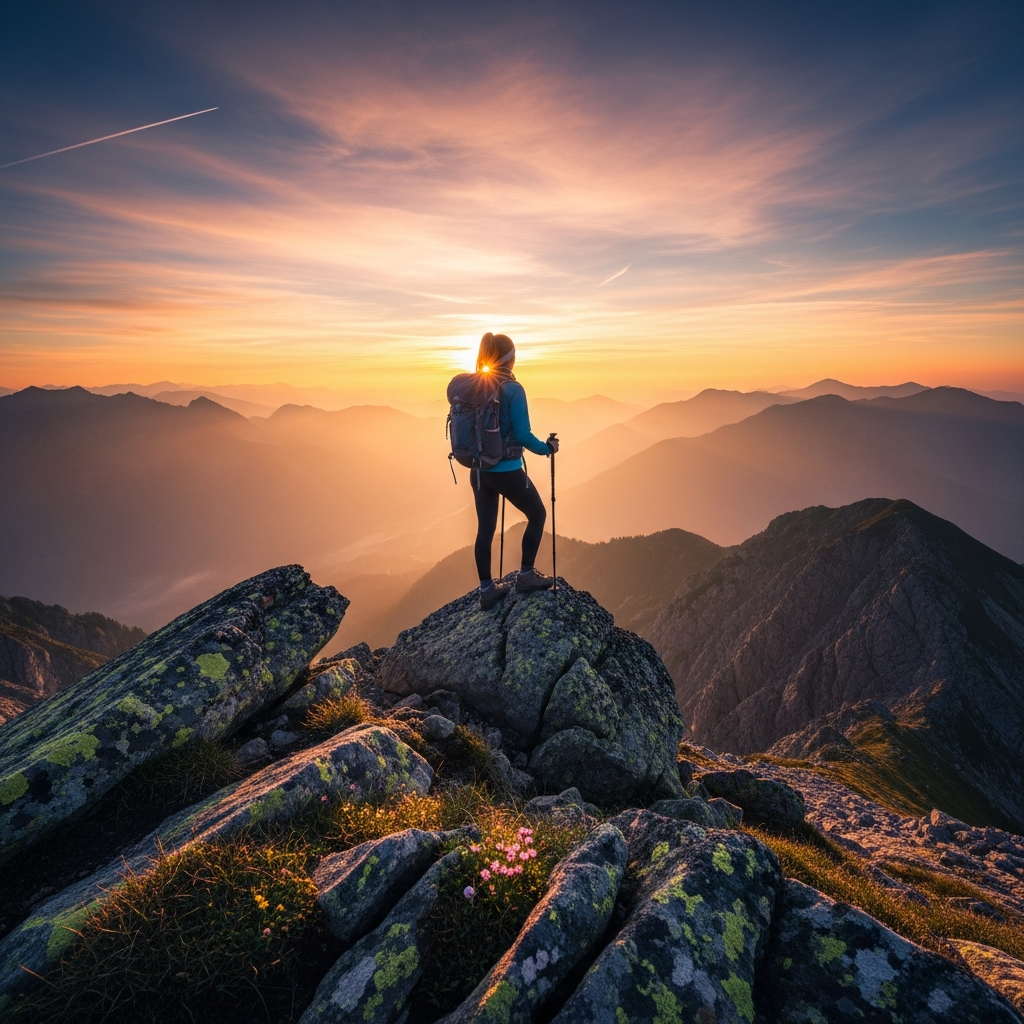
Environmental portraiture is one of the most powerful Outdoor Photography Concepts because it uses the location to provide context about the subject’s life, interests, or profession. The background is not merely a blur of bokeh; it is an active character in the story. For example, a hiker photographed on a mountain trail is a more engaging environmental portrait than a simple headshot against a uniform background. The setting confirms and deepens the viewer’s understanding of the subject.
Key techniques in these Outdoor Photography Concepts include using the environment to frame the subject, employing natural elements like trees or rocks as leading lines, and most importantly, managing the contrast between the subject and the bright outdoor background. Often, a photographer will need to use a flash or reflector to ‘fill’ the shadows on the subject’s face, ensuring they are properly exposed against the brighter background. This careful balance of light is essential for professional environmental Outdoor Photography Concepts.
Outdoor Fashion and Lifestyle Concepts
Outdoor Fashion Photography takes the principles of portraiture and applies them to apparel and lifestyle storytelling. The location acts as a dramatic backdrop that enhances the mood and tone of the clothing being showcased. Current trends in this area focus on authenticity and a connection to nature, often using natural elements like wind, water, and texture to add dynamic movement and contrast to the scene. Experimenting with time, weather, and lighting, as advised for outdoor fashion shoots, is key to developing unique Outdoor Photography Concepts.
To execute these Outdoor Photography Concepts successfully, a photographer must master posing the subject naturally within the scene. Rather than stiff, formal poses, the focus is on candid, action-oriented shots—walking, running, or interacting with the environment. Utilizing props is also a common trick to make the poses feel more organic and less forced. The selection of the location itself is paramount; choosing a visually engaging spot like a rugged coastline, a lush forest, or an abandoned structure dramatically elevates the final image and strengthens the overall Outdoor Photography Concepts.

Advanced Technical and Creative Outdoor Photography Concepts
As technology evolves, so too do the possibilities for complex and visually stunning Outdoor Photography Concepts. Beyond the basics of light and composition, advanced techniques allow photographers to capture elements of reality that the human eye cannot perceive, adding an ethereal and unique dimension to their work. These skills often require specialized equipment and a deep understanding of exposure dynamics.
Long Exposure Photography: Time as an Element
Long Exposure Photography is a transformative technique among advanced Outdoor Photography Concepts where the camera’s shutter is kept open for an extended period, ranging from a few seconds to several minutes. This technique has the primary effect of blurring any moving elements in the scene while keeping stationary elements sharp. It is primarily used to capture the movement of water, clouds, or light trails, transforming the chaotic into the serene.
One of the most popular uses of this technique is in capturing waterfalls or coastal scenes. A long exposure will turn rushing water into a silky, misty flow, creating a tranquil atmosphere that is a hallmark of many successful Outdoor Photography Concepts. To achieve this effect during daylight, Neutral Density (ND) filters are essential. These are dark pieces of glass that attach to the lens, blocking light and forcing the photographer to use a longer shutter speed. Understanding the correct strength of the ND filter—such as a 10-stop ‘Big Stopper’—is key to successfully executing these specialized Outdoor Photography Concepts.
Infrared Photography: Seeing the Unseen
Infrared (IR) photography offers one of the most creatively unique Outdoor Photography Concepts by capturing light that is invisible to the naked eye. Most digital cameras block infrared light, so this genre requires either a specialized camera conversion or a very strong IR filter. The resulting images are surreal and ethereal: foliage appears bright white (the ‘Wood Effect’ or ‘Luminosity’), water often turns dark and moody, and the sky becomes dramatically dark.
The creative potential of these unique Outdoor Photography Concepts is immense. Landscapes taken on a sunny day suddenly look like a winter wonderland, giving a familiar scene an entirely new, dreamlike quality. Because the focus point for infrared light is different from visible light, it can be a technically demanding genre, requiring precise focusing and often resulting in a high-contrast monochromatic image. However, the unique aesthetic appeal of IR images makes them highly sought after in the world of specialized Outdoor Photography Concepts.
The Storytelling Imperative in Modern Outdoor Photography Concepts
In the age of visual oversaturation, the most successful Outdoor Photography Concepts are those that go beyond mere beauty to tell a compelling story. A photograph that documents, conserves, or evokes a powerful emotional response will always resonate more deeply with an audience. This focus on narrative aligns with the growing trend of environmental photography, which uses imagery to highlight a relationship or issue within nature.
Documentary and Conservation Concepts
The trend toward Environmental Photography and conservation-focused Outdoor Photography Concepts is rapidly gaining traction. This is not just about taking pretty pictures of endangered species or pristine landscapes; it is about using the camera as a tool for advocacy. A photographer working in this vein might spend weeks documenting the impact of a specific environmental issue—such as drought, pollution, or invasive species—on a local ecosystem. The resulting images are designed to be informative, provocative, and moving, prompting viewers to consider their role in the environment.
Documentary-style Outdoor Photography Concepts are often shot in a sequence, creating a visual essay that traces a narrative arc. For instance, a series might follow a river from its clean mountain source down to a polluted urban estuary, with each image building on the narrative of human impact. This work requires journalistic integrity, research, and a commitment to authenticity, standing in contrast to purely aesthetic Outdoor Photography Concepts. The power of these images lies in their truth, making them an essential part of the modern outdoor photography landscape.
Personal Project and Emotional Resonance
Even non-documentary Outdoor Photography Concepts benefit from a strong personal narrative. A project-based approach, where a photographer dedicates time to shooting a singular, focused idea, often results in the most cohesive and impactful work. This could be a personal journey to photograph all the national parks in a specific style, an exploration of one particular body of water through the changing seasons, or a focus on the overlooked beauty of a local urban forest.
The key to these successful Outdoor Photography Concepts is emotional resonance. The image should convey how the photographer felt when they were there, not just what they saw. This might involve choosing a shallow depth of field to isolate a subject and create a feeling of intimacy, or using a wide, high-contrast black-and-white treatment to convey a sense of gravitas and timelessness. By infusing the image with personal meaning and a consistent style, the photographer creates work that is unique and immediately recognizable, elevating simple scenic images into profound Outdoor Photography Concepts.
Practical Execution: Tools and Techniques for Modern Outdoor Photography Concepts
To effectively translate ambitious Outdoor Photography Concepts into tangible images, a photographer needs not only creative vision but also practical mastery over their tools. While the spirit of outdoor photography is about minimizing barriers between the artist and nature, certain equipment and preparation are essential for safety, stability, and optimal image quality.
Essential Gear and Pre-Planning
No matter the specific genre of Outdoor Photography Concepts you pursue, a few gear items are universally critical. A sturdy tripod is arguably the most important accessory, especially for landscape and astrophotography, where long exposure times are common. Using a tripod eliminates camera shake and allows for precise composition. Furthermore, a good set of filters—especially Polarizing Filters (CPL) to manage reflections and increase saturation, and Neutral Density (ND) filters for long exposures—is fundamental to advanced outdoor work.
Beyond the gear, a crucial aspect of successful Outdoor Photography Concepts is thorough pre-planning. This includes:
- Scouting Locations: Using maps and online tools to identify visually appealing areas.
- Tracking Light: Using sun-tracking applications to predict the angle and quality of light at different times of the day and year.
- Checking Weather: Being aware of changing conditions to either prepare for dramatic weather or avoid unsafe situations.
- Managing Permits/Access: Ensuring you have the legal right to photograph the chosen location, especially on private or protected lands.
Post-Processing as a Final Step
In modern Outdoor Photography Concepts, post-processing is considered the final and indispensable phase of image creation. Raw files captured directly from the camera are merely the ‘digital negatives’ and require calibration and enhancement to reach their full potential. This process is about recreating the mood and atmosphere that the photographer experienced at the moment of capture, not drastically altering reality.
Key post-processing steps that enhance Outdoor Photography Concepts include:
- Color Correction: Adjusting white balance and tint to ensure natural-looking colors.
- Contrast and Tone: Fine-tuning highlights and shadows to reveal detail lost in the original capture.
- Sharpening: Applying selective sharpening to the main subject or points of interest.
- Local Adjustments: Using masks or brushes to selectively brighten dark foregrounds or adjust the color of a moody sky, all while maintaining the authenticity of the overall scene.
The ability to process an image subtly and effectively is a crucial skill that reinforces the core visual intention of the Outdoor Photography Concepts from the very beginning.
The Future of Outdoor Photography Concepts: Trends and Evolution
The landscape of outdoor photography is constantly changing, driven by new visual trends and the cultural shift towards authenticity and environmental awareness. Looking ahead, several core Outdoor Photography Concepts and styles are emerging and gaining dominance, offering exciting new avenues for visual exploration. These trends emphasize natural beauty while demanding creative originality and technical mastery.
The Rise of Authentic and Environmental Storytelling
One of the most significant shifts in modern Outdoor Photography Concepts is the push for authenticity. As viewers become more discerning, the overly processed, hyper-saturated images of the past are giving way to more natural, genuine depictions of the world. This trend favors:
- Film-Inspired Aesthetics: A move toward the soft colors, grain, and general look of analog film, often achieved through new filters and editing apps that mimic the retro look.
- Documentary Flair: Scenes that look less posed and more candid, even in portraiture or fashion Outdoor Photography Concepts.
- Emphasis on Imperfection: Embracing elements like rain streaks, mist, or soft sun flare rather than eliminating them, which adds a layer of realism and depth.
This focus on the genuine experience is deeply integrated into contemporary Outdoor Photography Concepts, where the feeling of the image is valued as much as its technical perfection.
The Integration of Fashion and Nature
Another notable trend is the strong crossover between fashion, lifestyle, and nature photography, creating a distinct niche within Outdoor Photography Concepts. This style uses dramatic, often remote, natural settings as the backdrop for high-concept fashion or lifestyle shoots. The key is the juxtaposition: the elegant, intentional style of the subject contrasts beautifully with the raw, untamed nature of the location.
To master this segment of Outdoor Photography Concepts, photographers must excel at:
- Location Scouting: Finding visually rich and unique outdoor settings.
- Light Manipulation: Using portable strobes or reflectors to perfectly light the subject against a wide, naturally lit background.
- Narrative Focus: Ensuring the model’s interaction with the environment tells a coherent story, making the final image feel like a still from an epic film.
These elevated and integrated Outdoor Photography Concepts require a balance of technical skill in both portraiture and landscape to achieve their ambitious visual goals.
The discipline of outdoor photography is a lifelong pursuit, combining technical skill, artistic vision, and a deep reverence for the natural world. By consistently practicing these sophisticated Outdoor Photography Concepts, one can move beyond simply recording a scene and instead begin to interpret and share the profound, ever-changing drama of the world outside. The ultimate goal is to create impactful imagery that invites the viewer to look closer and feel more deeply, embodying the true spirit of great Outdoor Photography Concepts.